2026 Financial Planning: Weddings, Education, and Life Events

Effective 2026 financial planning is crucial for navigating escalating costs of major life events, demanding strategic budgeting for anticipated increases in expenses like weddings and education.
As we look ahead to 2026, the landscape of personal finance continues to evolve, presenting both opportunities and challenges. Proactive 2026 financial planning becomes indispensable, especially when contemplating major life events such as weddings or higher education, which are projected to see significant cost increases. Understanding these impending shifts and preparing accordingly is not just smart; it’s essential for securing your financial future.
Understanding the 2026 Economic Outlook for Major Life Events
The year 2026 is anticipated to bring continued inflationary pressures and shifts in consumer spending, directly impacting the costs associated with significant life milestones. Economic forecasts suggest that while overall inflation might stabilize, certain sectors, particularly those related to services and specialized goods, could experience above-average price hikes. This makes foresight in financial planning more important than ever.
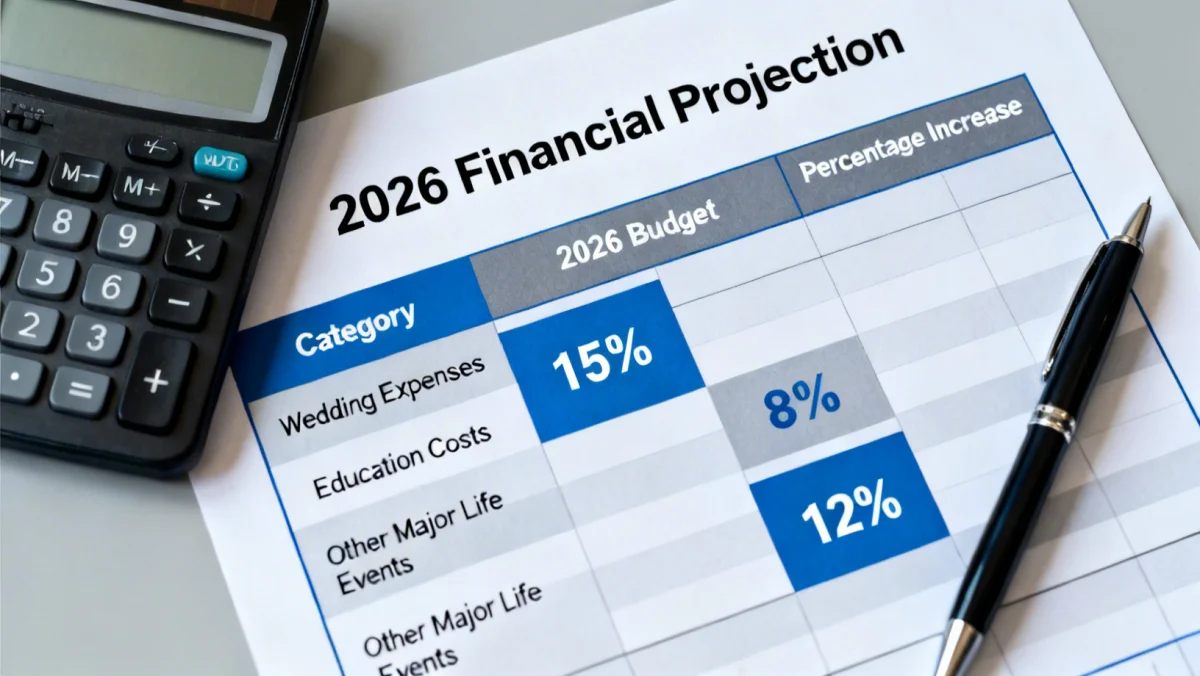
For example, industry analysts are projecting a potential 25% increase in wedding costs by 2026. This surge is attributed to various factors, including rising labor costs for vendors, increased demand for unique experiences, and supply chain complexities for materials. Similarly, education expenses are expected to climb by around 15%, driven by institutional operating costs, technological upgrades, and faculty salaries.
inflationary pressures and their impact
Inflation is not a uniform phenomenon; it affects different sectors disparately. Understanding where these pressures are most acute allows for more targeted financial preparation. The services sector, which includes many wedding vendors like caterers, photographers, and event planners, is particularly susceptible to wage inflation, as labor is a significant component of their operating costs. Similarly, the specialized resources required for modern educational institutions contribute to rising tuition fees.
- Vendor Costs: Expect higher prices for wedding services due to increased demand and labor expenses.
- Supply Chain: Material costs for wedding decor, attire, and educational supplies may rise.
- Tuition Fees: Universities and colleges will likely adjust fees to cover operational and technological advancements.
- Interest Rates: Student loan interest rates could influence the overall cost of education.
The economic outlook for 2026 is complex, demanding a nuanced approach to financial planning. By acknowledging these potential cost increases early, individuals and families can begin to adjust their savings strategies and explore alternative options to mitigate the financial burden. This proactive stance is key to navigating the economic realities of the coming years successfully.
Budgeting for a 25% Increase in Wedding Costs
Planning a wedding in 2026 means facing a potentially significant increase in expenses. A 25% rise could turn an already substantial investment into a formidable financial challenge if not properly anticipated. Effective budgeting strategies are therefore paramount to ensure your dream wedding doesn’t become a financial nightmare.
The first step is to establish a realistic baseline. Research current wedding costs in your desired location and then apply the projected 25% increase to each category. This provides a more accurate picture of what you might actually spend. Remember that flexibility and creativity can be your greatest allies in managing these elevated costs.
strategic savings and cost-cutting measures
To absorb a 25% increase, boosting your savings rate is crucial. Consider setting aside an additional percentage of your income specifically for wedding expenses. This might involve temporary lifestyle adjustments or seeking additional income streams. Beyond saving, exploring cost-cutting measures without sacrificing quality is also vital.
- Prioritize Expenses: Identify what aspects of the wedding are most important to you and allocate more funds there, cutting back on less critical areas.
- Off-Season Dates: Opting for a wedding during an off-peak season or on a weekday can significantly reduce venue and vendor costs.
- DIY Elements: Embrace do-it-yourself projects for invitations, decorations, or favors to save on professional services.
- Negotiate and Bundle: Don’t be afraid to negotiate prices with vendors or inquire about package deals for multiple services.
Navigating a 25% increase in wedding costs requires a blend of rigorous saving, smart spending, and strategic decision-making. By breaking down the budget, identifying areas for potential savings, and being proactive in your financial approach, couples can still achieve their ideal wedding celebration without undue financial strain. Early planning provides the best chance for success.
Addressing the 15% Rise in Education Expenses for 2026
The projected 15% increase in education expenses by 2026 poses a serious concern for students and families planning for college or advanced degrees. This rise encompasses not just tuition, but also fees, room and board, books, and living expenses. Preparing for this necessitates a multi-faceted approach to funding and cost management.
Starting early is the most effective strategy. Even small, consistent contributions to dedicated education savings accounts can grow substantially over time, thanks to compounding interest. Understanding the various types of educational institutions and their respective cost structures can also guide decisions toward more affordable options.
exploring funding avenues and cost mitigation
Beyond personal savings, a comprehensive strategy for education funding involves exploring all available avenues. This includes federal and state aid, scholarships, grants, and potentially even employer-sponsored programs. Each option has its own eligibility criteria and application processes, requiring diligent research and timely submission.
- 529 Plans: Utilize tax-advantaged 529 college savings plans for dedicated education savings.
- Scholarships and Grants: Actively search and apply for scholarships and grants, which do not need to be repaid.
- Community College First: Consider starting at a community college to complete general education requirements at a lower cost before transferring to a four-year institution.
- Work-Study Programs: Explore work-study opportunities to offset costs while gaining valuable experience.
The 15% increase in education expenses for 2026 highlights the need for strategic foresight. By combining robust savings plans with diligent exploration of financial aid and cost-saving measures, families can effectively mitigate the impact of rising costs. Education remains a valuable investment, and careful planning ensures it remains accessible and manageable.
Integrating Major Life Events into a Comprehensive Financial Plan
Major life events like weddings and education are not isolated incidents; they are significant components of a broader financial journey. Integrating these anticipated expenses into a comprehensive financial plan for 2026 ensures that other financial goals, such as retirement savings or homeownership, are not derailed. This holistic approach provides stability and clarity.
A truly comprehensive plan considers your entire financial ecosystem. This means evaluating your current income, expenses, assets, and liabilities. It also involves setting clear, measurable financial goals for each life event and for your overall financial well-being. Regular reviews and adjustments to this plan are crucial as circumstances change.
the role of financial advisors and technology
For many, navigating the complexities of integrating these large expenses into a long-term plan can be challenging. This is where professional guidance can be invaluable. Financial advisors offer expertise in creating personalized strategies, identifying potential pitfalls, and optimizing investment and savings vehicles.
- Professional Guidance: Consult with a financial advisor to develop a personalized plan that accounts for all major life events.
- Budgeting Software: Utilize budgeting apps and software to track spending, monitor progress towards savings goals, and identify areas for improvement.
- Automated Savings: Set up automated transfers to your savings accounts to ensure consistent contributions without conscious effort.
- Emergency Fund: Maintain a robust emergency fund to cover unexpected costs, preventing the need to dip into funds allocated for major life events.
Integrating major life events into a comprehensive financial plan for 2026 is about more than just saving for a specific goal; it’s about building a resilient financial framework. By leveraging expert advice and modern tools, individuals can confidently approach these milestones, knowing their financial future is well-managed and secure.
Leveraging Investment Strategies for Future Expenses
Simply saving cash in a low-interest account might not be enough to combat the projected cost increases for weddings and education by 2026. To truly stay ahead, leveraging strategic investment options can help your money grow and potentially outpace inflation. The key is to match your investment strategy with your time horizon and risk tolerance.
For expenses expected in the near future, such as a 2026 wedding, lower-risk, more liquid investments might be appropriate. For longer-term goals like education savings for a young child, a more aggressive growth-oriented portfolio could be considered. Diversification is always a critical component of any sound investment strategy.
diversifying portfolios and managing risk
Diversification involves spreading your investments across various asset classes to minimize risk. This might include a mix of stocks, bonds, mutual funds, or exchange-traded funds (ETFs). Understanding your risk tolerance is crucial; you want to choose investments that you are comfortable holding, especially if there are market fluctuations.
- Index Funds/ETFs: Consider low-cost index funds or ETFs for broad market exposure and diversification.
- Bonds: Incorporate bonds for stability, especially as you get closer to your target date for the expense.
- Robo-Advisors: Utilize robo-advisors for automated, diversified portfolios tailored to your risk profile.
- Regular Rebalancing: Periodically rebalance your portfolio to maintain your desired asset allocation and risk level.
Leveraging appropriate investment strategies is a powerful tool in preparing for 2026’s increased major life event expenses. By carefully selecting investments that align with your financial goals and risk tolerance, and by consistently monitoring and adjusting your portfolio, you can significantly enhance your ability to meet these future financial demands.
The Importance of Early Planning and Adaptability in 2026
The single most significant advantage anyone can have in preparing for the financial challenges of 2026 is early planning. The sooner you begin to save and strategize, the more time your money has to grow and the more flexibility you have to adapt to unforeseen changes. This proactive approach minimizes stress and maximizes financial readiness.
Adaptability is equally crucial. Economic conditions, personal circumstances, and even the nature of your life events can change. A rigid financial plan that doesn’t allow for adjustments is less likely to succeed. Regularly reviewing your plan and being willing to modify it based on new information or altered priorities is a hallmark of effective financial management.
building financial resilience
Building financial resilience means creating a buffer against unexpected financial shocks. This includes not only an emergency fund but also a diversified income stream, manageable debt levels, and adequate insurance coverage. These elements work together to protect your financial stability, even when major expenses arise.
- Start Now: Begin saving and planning as soon as possible to take advantage of compounding returns.
- Regular Reviews: Schedule periodic reviews of your financial plan, at least annually, to ensure it remains aligned with your goals and current economic conditions.
- Contingency Planning: Develop contingency plans for potential setbacks, such as job loss or unexpected medical expenses.
- Financial Literacy: Continuously educate yourself on personal finance topics to make informed decisions and adapt to new strategies.
Early planning combined with a robust sense of adaptability forms the cornerstone of effective financial preparation for 2026 and beyond. By embracing these principles, individuals and families can confidently navigate the anticipated cost increases for major life events, transforming potential obstacles into manageable milestones on their journey towards financial prosperity.
| Key Point | Brief Description |
|---|---|
| Wedding Cost Increase | Anticipate a 25% rise by 2026, requiring boosted savings and strategic cuts. |
| Education Expense Hike | Expect a 15% increase, necessitating early savings and diverse funding. |
| Integrated Financial Plan | Combine all major life events into one holistic, adaptable financial strategy. |
| Investment Strategies | Utilize diversified investments to grow funds and outpace inflation for future costs. |
Frequently Asked Questions About 2026 Financial Planning
The projected 25% increase in wedding costs for 2026 is driven by several factors, including rising labor costs for skilled vendors, increased demand for bespoke services, and potential supply chain issues affecting materials. Inflationary pressures across the service industry contribute significantly to this estimate.
To combat a 15% rise in education expenses, prioritize tax-advantaged 529 plans for savings. Actively seek scholarships and grants, consider starting at a community college, and explore work-study programs. Early and consistent saving, along with smart investment choices, will be key.
Integrate large expenses by first establishing clear goals and realistic budgets for each event. Consult a financial advisor to create a comprehensive plan that balances these goals with retirement and other savings. Utilize budgeting tools and automate savings to ensure consistent progress.
For 2026 events, consider diversified portfolios tailored to your timeline. Shorter-term goals might favor lower-risk options like bonds or high-yield savings, while longer-term goals can benefit from growth-oriented investments like index funds. Regular portfolio rebalancing and risk assessment are crucial.
Absolutely. An emergency fund is more critical than ever. It acts as a financial safety net, preventing you from dipping into funds allocated for your wedding or education if unexpected costs arise. It ensures your dedicated savings remain untouched for their intended purpose, maintaining financial stability.
Conclusion
Navigating the financial landscape of 2026, with its projected increases in wedding and education costs, demands a proactive and informed approach. By embracing early planning, strategic budgeting, and diversified investment strategies, individuals and families can effectively prepare for these significant life events. The key lies in understanding the economic forecasts, adapting your financial plan as needed, and leveraging available resources to build a resilient financial future. Preparing now ensures that these exciting milestones can be celebrated and achieved without undue financial stress, transforming potential challenges into well-managed successes.