Green Economy Education: 4 High-Demand Fields by 2026

The rapidly expanding green economy is generating significant demand for specialized skills, highlighting four emerging fields in green economy education expected to experience high demand by 2026.
The global shift towards sustainability is not just an environmental imperative; it’s a profound economic transformation. As we approach 2026, the demand for professionals skilled in various aspects of the green economy education is skyrocketing. This article delves into four emerging fields that promise substantial career opportunities and impactful contributions to a sustainable future.
Understanding the Green Economy Landscape by 2026
The green economy represents a paradigm shift from traditional economic models, prioritizing environmental protection, resource efficiency, and social equity. By 2026, the United States is projected to see a significant acceleration in job growth within this sector, driven by policy, consumer demand, and technological innovation. This growth isn’t just about ‘green jobs’ in the traditional sense; it encompasses a broad spectrum of roles that integrate sustainability principles across all industries.
This evolving landscape necessitates a workforce equipped with interdisciplinary skills, combining technical expertise with an understanding of environmental science, policy, and economics. Education systems are rapidly adapting to meet this demand, offering specialized programs and certifications that prepare individuals for these emerging opportunities. The focus is on practical, solutions-oriented learning that addresses real-world environmental challenges.
The driving forces behind green job growth
Several key factors are fueling the expansion of green jobs. Government incentives and regulations, such as those promoting renewable energy and sustainable infrastructure, play a crucial role. Furthermore, increasing corporate responsibility and consumer awareness are pushing businesses to adopt greener practices, creating new roles in sustainability management and green product development.
- Policy & Regulation: Federal and state initiatives promoting clean energy and sustainable practices.
- Technological Innovation: Advancements in renewable energy, waste management, and sustainable agriculture.
- Consumer Demand: Growing preference for eco-friendly products and services.
- Corporate Responsibility: Companies integrating sustainability into their core business models.
The green economy is no longer a niche market; it is becoming a foundational element of the broader economic structure. This integration means that even conventional roles are beginning to require a ‘green’ component, making sustainability literacy a valuable asset across all professions. Preparing for this future means understanding where these opportunities lie and acquiring the necessary educational background.
Renewable Energy Systems and Management
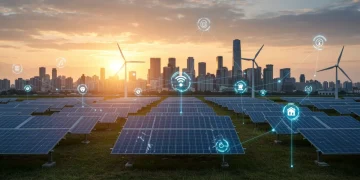
One of the most prominent sectors within the green economy is renewable energy. As the world strives to reduce its reliance on fossil fuels, the demand for experts in solar, wind, geothermal, and hydropower technologies continues to expand rapidly. By 2026, proficiency in designing, installing, maintaining, and managing these complex systems will be highly sought after.
This field requires a blend of engineering, technical, and project management skills. Professionals will be involved in everything from large-scale utility projects to residential installations, ensuring efficient energy production and distribution. The continuous innovation in renewable technologies also means a constant need for research and development specialists who can push the boundaries of current capabilities.
Specializations within renewable energy
The renewable energy sector is vast, offering numerous specialized career paths. Individuals can focus on specific technologies or broader management roles that oversee multiple projects. The interdisciplinary nature of this field often requires collaboration with policy makers, environmental scientists, and financial analysts.
- Solar Photovoltaic Installation & Maintenance: Expertise in setting up and servicing solar panels for various applications.
- Wind Turbine Technology: Skills in the construction, operation, and repair of wind energy systems.
- Energy Storage Solutions: Developing and implementing battery and other energy storage technologies.
- Grid Modernization: Designing smart grids to integrate diverse renewable energy sources efficiently.
The educational pathways for these roles range from vocational training and associate degrees for technicians to bachelor’s and master’s degrees in engineering or energy management. Continuous learning is also critical, as the technology in this field evolves at a rapid pace. Those entering this field can expect dynamic careers with significant opportunities for growth and innovation.
Sustainable Agriculture and Food Systems
Feeding a growing global population sustainably is one of the most pressing challenges of our time. The field of sustainable agriculture and food systems addresses this by focusing on environmentally sound and economically viable farming practices. By 2026, professionals who can innovate in areas like organic farming, permaculture, agroecology, and precision agriculture will be in high demand.
This field is not just about growing food; it encompasses the entire supply chain, from farm to fork. It involves understanding soil health, water conservation, pest management without harmful chemicals, and developing resilient food systems that can withstand climate change impacts. There’s also a strong emphasis on reducing food waste and promoting local food economies.
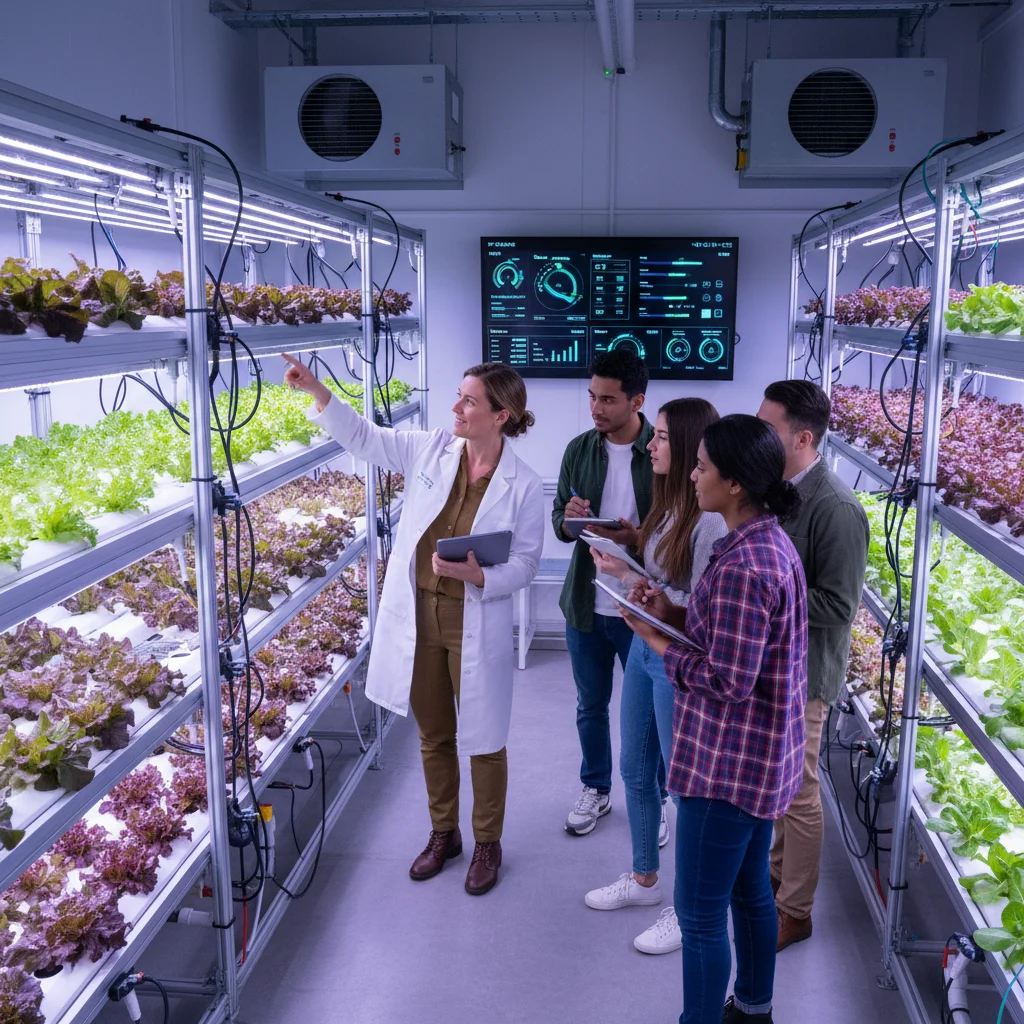
Agricultural technology, or ‘agritech,’ is playing an increasingly vital role, with innovations in sensors, drones, and AI optimizing resource use and crop yields. This requires individuals with strong analytical skills and an understanding of both biological and technological systems.
Innovations in food production
The future of food production is being shaped by cutting-edge innovations aimed at increasing efficiency and reducing environmental footprint. These advancements are creating new job categories that blend traditional agricultural knowledge with modern scientific and technological expertise.
- Vertical Farming & Hydroponics: Designing and managing indoor farming systems for urban environments.
- Agroforestry & Regenerative Agriculture: Implementing practices that enhance biodiversity and soil carbon sequestration.
- Food Supply Chain Optimization: Developing efficient logistics to reduce waste and carbon emissions.
- Sustainable Aquaculture: Farming aquatic organisms in an environmentally responsible manner.
Educational programs in this area often combine biology, environmental science, economics, and even business management. Graduates can find roles as farm managers, agricultural consultants, food policy analysts, or researchers. The ability to bridge scientific knowledge with practical application is paramount for success in this critical sector.
Environmental Policy, Law, and Compliance
Effective environmental protection relies heavily on robust policy frameworks, legal enforcement, and compliance mechanisms. As the green economy expands, the need for professionals who understand the intricate web of environmental regulations, both domestically and internationally, will become even more critical by 2026.
These experts work at the intersection of science, law, and governance. They help shape legislation, ensure businesses adhere to environmental standards, and advocate for sustainable practices in public and private sectors. Their work is essential for translating scientific understanding into actionable policies that protect natural resources and mitigate climate change.
This field demands strong analytical skills, attention to detail, and excellent communication abilities to navigate complex legal texts and explain their implications to diverse audiences. It often involves working with government agencies, non-profit organizations, and corporations to achieve environmental objectives.
Key areas of focus
Environmental policy and law is a dynamic field that responds to evolving environmental challenges and scientific discoveries. Professionals can specialize in various aspects, from drafting legislation to ensuring corporate adherence to environmental mandates.
- Climate Change Policy: Developing and implementing strategies to reduce greenhouse gas emissions and adapt to climate impacts.
- Natural Resource Management Law: Legal frameworks for protecting water, forests, and biodiversity.
- Corporate Environmental Compliance: Advising businesses on meeting regulatory requirements and achieving sustainability goals.
- Environmental Advocacy: Working with NGOs to influence public opinion and policy decisions.
Educational paths typically include degrees in environmental law, public policy, environmental studies, or political science, often with a focus on environmental issues. Internships with government bodies or environmental organizations are invaluable for gaining practical experience. These roles offer the opportunity to make a direct impact on environmental governance and corporate responsibility.
Green Building and Sustainable Infrastructure Development
The way we design, construct, and operate our buildings and infrastructure has a profound impact on the environment. The green building and sustainable infrastructure sector is dedicated to minimizing this impact while creating healthier, more efficient spaces. By 2026, demand for architects, engineers, construction managers, and urban planners skilled in sustainable design principles will be exceptionally high.
This field focuses on reducing energy consumption, conserving water, using eco-friendly materials, and minimizing waste throughout the lifecycle of a project. It involves applying principles like passive design, renewable energy integration, and smart building technologies. Professionals also consider the social and economic aspects of development, aiming for projects that benefit communities and are financially viable in the long term.
Collaboration is key in this sector, as projects often require input from diverse specialists, including environmental consultants, material scientists, and energy modelers. The goal is to create resilient, adaptable infrastructure that supports sustainable living and economic growth.
Innovations in sustainable construction
The construction industry is undergoing a significant transformation, driven by the need for more sustainable practices. New materials, technologies, and methodologies are emerging, creating exciting opportunities for professionals in this field.
- LEED Certification & Green Building Standards: Expertise in designing and constructing buildings to meet rigorous environmental performance benchmarks.
- Sustainable Urban Planning: Developing eco-friendly urban environments that prioritize walkability, public transit, and green spaces.
- Resilient Infrastructure Design: Creating infrastructure capable of withstanding the impacts of climate change, such as extreme weather events.
- Circular Economy Principles in Construction: Implementing strategies to reduce waste and maximize resource reuse in building projects.
Educational backgrounds for these careers typically include architecture, civil engineering, urban planning, and construction management, often with specialized certifications in green building (e.g., LEED AP). Practical experience through internships and involvement in sustainable design projects is highly valued. These roles are pivotal in shaping the physical environment of communities to be more sustainable and livable.
Navigating Education and Career Paths for 2026
As the green economy continues its rapid expansion towards 2026, understanding how to effectively navigate educational and career paths becomes paramount for aspiring professionals. The interdisciplinary nature of these fields means that a single degree might not be sufficient; often, a combination of formal education, specialized certifications, and practical experience is the most effective approach.
Prospective students should look for programs that offer hands-on experience, internships, and opportunities to work on real-world sustainability projects. Universities and vocational schools are increasingly partnering with industry leaders and environmental organizations to provide relevant training and networking opportunities. Furthermore, developing a strong foundational understanding in STEM subjects (Science, Technology, Engineering, and Mathematics) is often a critical stepping stone, regardless of the specific green field chosen.
Essential skills for green economy professionals
Beyond technical knowledge, certain soft skills are becoming increasingly important for success in the green economy. These include adaptability, problem-solving, critical thinking, and the ability to collaborate effectively across diverse teams. The dynamic nature of environmental challenges requires professionals who can continuously learn and innovate.
- Interdisciplinary Thinking: Ability to connect concepts from different fields (e.g., science, economics, policy).
- Data Analysis & Interpretation: Understanding and utilizing environmental data for informed decision-making.
- Project Management: Skills to oversee complex sustainability projects from conception to completion.
- Communication & Collaboration: Effectively conveying ideas and working with diverse stakeholders.
Networking within professional organizations and attending industry conferences can also provide invaluable insights and connections. The green economy is a community-driven sector, and building relationships with peers and mentors can open doors to new opportunities. Ultimately, a combination of specialized knowledge, practical experience, and strong interpersonal skills will position individuals for success in these high-demand fields.
| Key Field | Brief Description |
|---|---|
| Renewable Energy Systems | Design, installation, and management of solar, wind, and other clean energy technologies. |
| Sustainable Agriculture | Eco-friendly farming, food systems, and agritech innovations for resilient food supply. |
| Environmental Policy & Law | Shaping regulations, ensuring compliance, and advocating for environmental protection. |
| Green Building & Infrastructure | Designing and constructing eco-friendly buildings and resilient urban infrastructure. |
Frequently Asked Questions About Green Economy Careers
The green economy focuses on sustainable development without degrading the environment. It is growing due to increased environmental awareness, government policies promoting sustainability, technological advancements in clean energy, and strong consumer demand for eco-friendly products and services. This creates new jobs and transforms existing ones across various sectors.
Diverse educational backgrounds are valuable. Degrees in environmental science, engineering, public policy, sustainable agriculture, and architecture are highly relevant. Many roles also benefit from vocational training or certifications in specific green technologies. Interdisciplinary studies and continuous learning are key to adapting to evolving demands.
No, green jobs extend beyond traditional environmental roles. While specialists are crucial, the green economy’s principles are integrating into all sectors. This means that roles in finance, marketing, human resources, and IT increasingly require an understanding of sustainability to support green initiatives and corporate environmental goals. It’s a broad transformation.
Beyond technical expertise, critical thinking, problem-solving, and adaptability are vital. Strong communication and collaboration skills are also essential, as many green projects are interdisciplinary. An ability to analyze data, understand complex systems, and continuously learn about new technologies will also contribute significantly to success.
Engage with professional organizations, subscribe to industry newsletters, and attend webinars or conferences focused on sustainability and green technology. Following reputable environmental news sources and academic journals can also provide insights. Networking with professionals in your target fields is also an excellent way to stay informed about emerging opportunities.
Conclusion
The trajectory of the global economy towards sustainability is undeniable, and by 2026, the four fields highlighted – renewable energy, sustainable agriculture, environmental policy, and green building – will be at the forefront of this transformation. For individuals seeking impactful and future-proof careers, investing in green economy education is a strategic move. These sectors offer not only professional growth but also the opportunity to contribute meaningfully to a healthier planet and a more resilient society. The time to prepare for these vital roles is now, ensuring a skilled workforce capable of driving the green revolution forward.