NASA’s 2026 Budget: $3 Billion for New Lunar Missions – Updates & Impact
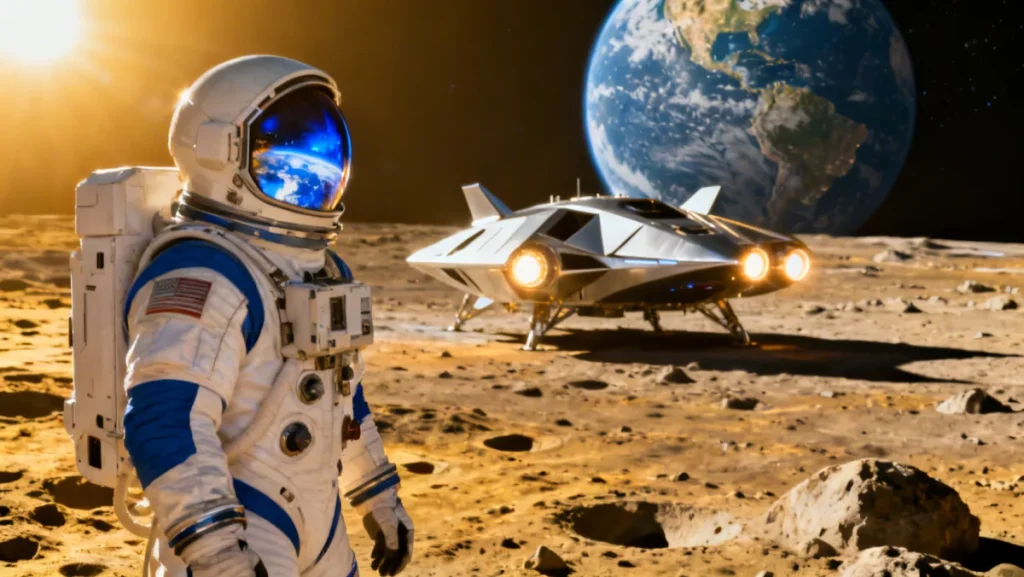
NASA’s 2026 budget includes a significant $3 billion allocation for new lunar missions, underscoring a robust commitment to advancing human exploration and scientific research on the Moon, with substantial implications for the future of space endeavors.
The landscape of space exploration is undergoing a monumental shift, and at its forefront is the United States’ commitment to returning to the Moon. With NASA’s 2026 budget includes $3 billion for new lunar missions, the agency is poised to accelerate its ambitious plans, promising groundbreaking discoveries and technological advancements. This significant financial injection is not merely an allocation of funds; it represents a strategic investment in humanity’s future in space, setting the stage for a new era of lunar presence and exploration.
understanding NASA’s 2026 budget priorities
NASA’s 2026 budget reflects a clear strategic direction, prioritizing sustained human presence beyond low Earth orbit, particularly on and around the Moon. This financial blueprint outlines not only the agency’s immediate goals but also its long-term vision for deep space exploration, with lunar missions serving as a critical stepping stone.
The allocation of $3 billion specifically for new lunar missions signals an aggressive push to develop and deploy the necessary infrastructure and technologies. This includes advancements in lunar landers, habitation modules, and critical science payloads designed to explore the Moon’s south pole, an area believed to harbor significant water ice reserves.
key areas of investment
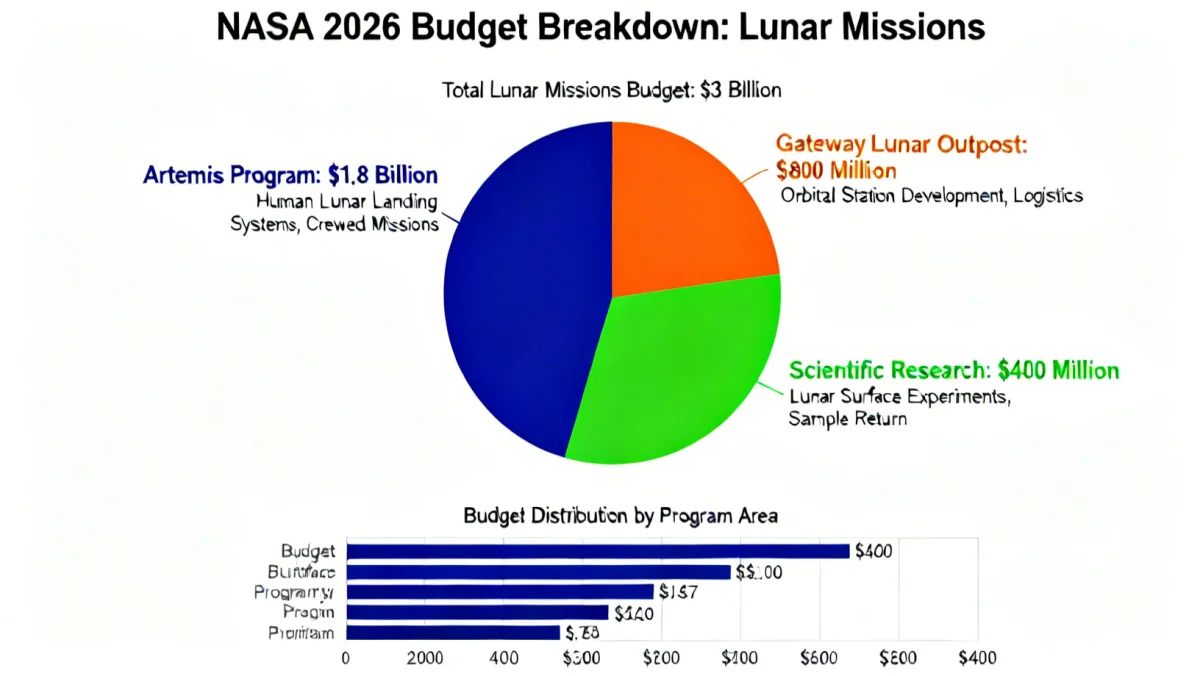
- Artemis Program Acceleration: A substantial portion of the funds will bolster the Artemis program, aiming for human return to the lunar surface.
- Lunar Gateway Development: Investment in the orbiting outpost around the Moon, crucial for sustained lunar operations and as a staging point for deeper space missions.
- Commercial Partnerships: Facilitating greater involvement from private industry in developing lunar technologies and services, fostering innovation and reducing costs.
These investments are designed to create a robust and sustainable lunar ecosystem, paving the way for future Mars missions. The strategy emphasizes international collaboration and commercial integration, leveraging diverse capabilities to achieve complex exploration objectives. By focusing on these core areas, NASA aims to not only land humans on the Moon but also to establish a lasting presence that supports scientific research and technological demonstrations.
The 2026 budget is a testament to NASA’s commitment to pushing the boundaries of human exploration. It provides the financial backbone for the ambitious Artemis missions, ensuring the development of next-generation technologies and the cultivation of international and commercial partnerships essential for long-term success. This strategic allocation will enable critical advancements in lunar surface operations, scientific investigations, and the eventual expansion of human presence deeper into the solar system.
the artemis program: a cornerstone of lunar exploration
The Artemis program stands as the flagship initiative for NASA’s lunar ambitions, aiming to land the first woman and the next man on the Moon, specifically targeting the lunar south pole. The significant funding from the 2026 budget is critical for advancing the program’s complex phases, from developing the Space Launch System (SLS) rocket to the Human Landing System (HLS) and the Gateway lunar outpost.
This program is not just about returning to the Moon; it’s about establishing a sustainable presence and preparing for human missions to Mars. The 2026 budget ensures that key development milestones can be met, pushing forward the design, construction, and testing of vital hardware and systems required for these ambitious endeavors. The focus is on creating a long-term lunar exploration architecture.
advancing human lunar landers
One of the most crucial elements receiving significant attention is the Human Landing System. The budget supports multiple commercial partners in developing competing lander designs, fostering innovation and ensuring redundancy. This competitive approach is expected to yield more efficient and reliable systems for transporting astronauts to and from the lunar surface.
- Diverse Lander Designs: Encouraging multiple private companies to develop unique HLS solutions.
- Technology Maturation: Funding for testing and refining lander technologies, including propulsion, navigation, and life support.
- Safety and Reliability: Ensuring that all lander systems meet stringent safety standards for crewed missions.
Beyond the landers, the Artemis program also encompasses the development of new spacesuits, lunar rovers, and scientific instruments designed to operate in the harsh lunar environment. These components are essential for enabling extended stays on the Moon and conducting groundbreaking research. The investment reflects a comprehensive approach to lunar exploration, covering all aspects from launch to surface operations and return.
The Artemis program, bolstered by the 2026 budget, represents a bold step forward in human spaceflight. By prioritizing the development of critical systems like the HLS and fostering private sector involvement, NASA is building a sustainable pathway to the Moon. This comprehensive strategy ensures that future lunar missions are not isolated events but part of a larger plan to expand humanity’s reach into the cosmos, laying the groundwork for eventual Martian exploration.
financial impact and economic implications
The $3 billion allocation for new lunar missions within NASA’s 2026 budget carries substantial financial and economic implications far beyond the agency itself. This investment acts as a powerful catalyst, stimulating growth in the aerospace sector, fostering job creation, and driving technological innovation across various industries. The ripple effect extends to manufacturing, research and development, and even education, as the demand for skilled workers in STEM fields increases.
Economists predict that every dollar invested in space exploration generates multiple dollars in economic benefits, through contracts with private companies, university research grants, and the commercialization of new technologies. This budget infusion is expected to create thousands of high-tech jobs, from engineers and scientists to technicians and project managers, particularly in states with strong aerospace presences.
job creation and industry growth
The expansion of lunar missions directly translates into new opportunities for businesses and individuals. Companies involved in manufacturing spacecraft components, developing software for mission control, or providing logistical support will see increased demand for their services.
- Aerospace Manufacturing: Boosts production of rockets, landers, and other spacecraft.
- High-Tech Research & Development: Drives innovation in materials science, robotics, and artificial intelligence.
- Skilled Workforce Demand: Creates a need for engineers, scientists, and technicians, stimulating STEM education.
Furthermore, the focus on commercial partnerships means that private companies are increasingly becoming integral players in space exploration. This collaboration not only diversifies the talent pool but also encourages cost-effective solutions and faster development cycles. The long-term economic benefits include the potential for new industries to emerge, such as lunar resource extraction or space tourism, which could fundamentally change global economies.
Ultimately, the financial commitment in NASA’s 2026 budget is more than just government spending; it’s a strategic investment in the nation’s economic future. By fostering innovation, creating jobs, and stimulating growth in critical sectors, these lunar missions contribute significantly to economic prosperity and technological leadership on a global scale. The benefits will resonate for decades, shaping new markets and inspiring future generations.
technological advancements driven by lunar goals
The ambitious goals of NASA’s new lunar missions, supported by the 2026 budget, are powerful drivers of technological innovation. The challenges of operating in the harsh lunar environment necessitate the development of cutting-edge technologies that often find applications far beyond space exploration. From advanced robotics to sophisticated life support systems, these breakthroughs have the potential to transform various terrestrial industries.
Developing robust lunar landers, sustainable habitats, and efficient resource utilization systems pushes the boundaries of engineering and science. Innovations in autonomous systems for navigation and operation, improved power generation and storage solutions, and advanced communication networks are all critical for long-duration lunar missions and will have significant terrestrial spin-offs.
innovations in life support and materials
Ensuring the survival and productivity of astronauts on the Moon requires revolutionary advancements in life support and materials science. Systems that recycle air and water more efficiently, and materials that can withstand extreme temperatures and radiation, are essential.
- Closed-Loop Life Support: Developing systems that minimize waste and maximize resource recycling for long-duration missions.
- Advanced Materials: Creating new alloys and composites resistant to radiation, extreme temperatures, and micrometeoroid impacts.
- In-Situ Resource Utilization (ISRU): Technologies to extract water, oxygen, and building materials from lunar regolith, reducing reliance on Earth supplies.
These technological leaps are not confined to space. For example, advancements in closed-loop systems could revolutionize sustainable living on Earth, while new materials could enhance various industrial applications. The focus on ISRU not only makes lunar missions more sustainable but also provides insights into resource management in challenging environments, with potential applications in remote or disaster-stricken areas on Earth.
The technological advancements spurred by NASA’s lunar missions are profound and far-reaching. The substantial investment in the 2026 budget ensures that these innovations continue to flourish, leading to breakthroughs that enhance our capabilities in space and deliver tangible benefits to society on Earth. This drive for exploration creates a legacy of scientific progress and technological prowess that impacts generations.
international collaborations and future outlook
NASA’s lunar exploration endeavors, significantly bolstered by the 2026 budget, are increasingly characterized by robust international collaborations. The scale and complexity of returning humans to the Moon and establishing a sustainable presence necessitate a global effort, pooling resources, expertise, and technological capabilities from partner nations. This collaborative approach not only shares the financial burden but also fosters diplomatic ties and promotes a shared vision for humanity’s future in space.
Major partners like the European Space Agency (ESA), the Japan Aerospace Exploration Agency (JAXA), and the Canadian Space Agency (CSA) are contributing critical components, modules, and scientific instruments to projects like the Gateway lunar outpost and various lunar surface missions. This synergy ensures a diverse range of perspectives and innovative solutions to complex challenges.
strengthening global partnerships
- Resource Sharing: Countries contribute specialized hardware, scientific instruments, and astronaut training.
- Knowledge Exchange: Facilitates the sharing of research findings, technical data, and operational experiences.
- Policy Alignment: Promotes common standards and regulations for future space activities, including resource utilization.
Looking ahead, the successful implementation of the 2026 budget’s lunar mission plans will pave the way for even more ambitious undertakings. The Moon is envisioned not just as a destination but as a proving ground for technologies and operational procedures required for human missions to Mars. The insights gained from establishing a lunar base, managing resources, and ensuring astronaut safety in a deep-space environment will be invaluable for future Martian expeditions.
The future outlook for space exploration, powered by NASA’s 2026 budget and its emphasis on lunar missions, is one of unprecedented collaboration and profound discovery. By uniting nations under a common goal, humanity is poised to achieve milestones that were once confined to science fiction, extending our reach deeper into the cosmos and unlocking new frontiers of knowledge and opportunity.
challenges and considerations for lunar missions
Despite the significant financial commitment in NASA’s 2026 budget for lunar missions, the path to sustained lunar presence is fraught with formidable challenges. These obstacles range from the technical complexities of operating in an extreme environment to the logistical demands of transporting crew and cargo, and the inherent risks associated with human spaceflight. Addressing these considerations effectively is paramount for the long-term success of the lunar program.
The lunar environment presents unique difficulties, including extreme temperature swings, pervasive lunar dust, and exposure to high levels of radiation. Developing robust systems that can withstand these conditions, while ensuring astronaut safety and mission functionality, requires continuous innovation and rigorous testing. Moreover, the logistics of supplying a lunar outpost from Earth pose significant challenges in terms of cost, frequency, and cargo capacity.
mitigating risks and ensuring sustainability
A key focus for NASA and its partners is to mitigate the inherent risks of lunar exploration and establish a sustainable operational model. This involves not only technological solutions but also strategic planning and international cooperation.
- Radiation Shielding: Developing advanced materials and habitats that protect astronauts from harmful cosmic and solar radiation.
- Dust Mitigation: Designing equipment and procedures to combat the abrasive and pervasive lunar dust, which can damage systems and pose health risks.
- Resource Logistics: Optimizing supply chains from Earth and advancing ISRU technologies to reduce reliance on terrestrial resources.
Beyond the technical hurdles, there are also political and budgetary considerations. Sustaining long-term funding for ambitious space programs can be challenging, requiring consistent public and governmental support. International coordination, while beneficial, also adds layers of complexity in terms of agreements, standards, and operational integration. The continuous evolution of technology and scientific understanding also means that mission plans must remain flexible and adaptable.
The challenges facing NASA’s lunar missions are substantial, but the agency’s 2026 budget demonstrates a clear commitment to overcoming them. By investing in risk mitigation strategies, fostering international collaboration, and prioritizing sustainable technologies, NASA aims to not only return to the Moon but to establish a durable and expanding human presence, paving the way for future deep-space exploration.
| Key Aspect | Brief Description |
|---|---|
| 2026 Budget Allocation | NASA commits $3 billion to new lunar missions, significantly boosting exploration efforts. |
| Artemis Program Focus | Funds accelerate Artemis goals, including human landings and sustainable lunar presence. |
| Economic Impact | Investment stimulates aerospace industry growth and job creation across the US. |
| Technological Advancements | Drives innovation in life support, materials, and robotics with terrestrial benefits. |
frequently asked questions about NASA’s 2026 lunar missions
The primary goal is to accelerate the Artemis program, ensuring a sustainable human return to the Moon, specifically targeting the lunar south pole. This investment supports the development of crucial technologies and infrastructure needed for long-term lunar presence and scientific exploration, laying groundwork for future Mars missions.
This significant funding is expected to expedite key development phases of the Artemis program. It will allow for faster progress in designing, testing, and deploying critical components like the Human Landing System and the Gateway lunar outpost, potentially shortening timelines for crewed lunar landings and sustained operations.
The investment is projected to stimulate significant economic growth in the aerospace sector, create thousands of high-tech jobs, and foster technological innovation. It supports commercial partnerships, drives demand for advanced manufacturing, and encourages a skilled workforce in STEM fields, leading to broader economic prosperity.
New technologies include advanced Human Landing Systems, closed-loop life support systems for sustainable habitats, radiation-shielding materials, and In-Situ Resource Utilization (ISRU) capabilities to extract resources from lunar regolith. These innovations are crucial for long-duration missions and have potential terrestrial applications.
International collaborations are central to NASA’s strategy. Partner nations like ESA, JAXA, and CSA contribute critical hardware, scientific instruments, and expertise. This collaboration shares the financial burden, fosters diplomatic ties, and leverages diverse capabilities, making the overall lunar exploration program more robust and comprehensive.
conclusion: shaping the future of space exploration
The announcement that NASA’s 2026 budget includes $3 billion for new lunar missions marks a pivotal moment in the history of space exploration. This substantial investment underscores a renewed and aggressive commitment to returning humans to the Moon and establishing a sustainable, long-term presence. Far from being a mere reiteration of past achievements, this budget allocation is a forward-looking strategy designed to push the boundaries of human endeavor, catalyze technological innovation, and foster unprecedented international collaboration. The financial impact will resonate across various sectors, stimulating economic growth and creating high-value jobs, while the scientific and technological advancements promise to yield benefits that extend far beyond the lunar surface. As we look towards 2026 and beyond, these missions are not just about reaching the Moon; they are about preparing humanity for its next giant leap into the cosmos, laying the groundwork for a future where space is not just visited, but inhabited and understood.