Inflation-Proofing Your Savings in 2026: Investment Strategies for Over 3.5% Returns

Effectively inflation-proofing your savings in 2026 demands a strategic approach to investment vehicles that consistently deliver returns exceeding 3.5%, navigating evolving economic landscapes.
Are you concerned about your hard-earned money losing value over time? In an ever-changing economic landscape, the challenge of inflation-proofing your savings in 2026 is more critical than ever. This guide explores robust investment vehicles designed to deliver returns above 3.5%, ensuring your financial future remains secure and prosperous.
Understanding the 2026 Economic Outlook and Inflation
As we look towards 2026, understanding the economic climate is paramount for any investor. Economic forecasts suggest a continued period of moderate inflation, potentially hovering above historical averages, influenced by global supply chain dynamics, geopolitical events, and evolving consumer demand. This environment makes traditional savings accounts, with their typically low interest rates, inadequate for preserving purchasing power.
The Federal Reserve’s monetary policies will play a crucial role, with interest rate adjustments impacting borrowing costs and investment returns. Investors must be agile, adapting their strategies to these macroeconomic shifts to ensure their portfolios not only keep pace with but also outgrow inflation.
Key Inflationary Drivers for 2026
Several factors are expected to contribute to inflationary pressures in 2026, making a proactive investment strategy essential:
- Global Supply Chain Resilience: Ongoing efforts to diversify and strengthen supply chains may still incur higher costs, passed on to consumers.
- Energy Price Volatility: Geopolitical tensions and shifts in energy policies can lead to unpredictable fluctuations in oil and gas prices.
- Wage Growth: A tight labor market could continue to drive wage increases, contributing to higher production costs.
- Government Spending: Continued fiscal stimulus or infrastructure projects could inject more money into the economy, fueling demand.
Navigating these drivers requires a clear understanding of which assets can withstand and thrive in such an environment. The goal isn’t just to match inflation, but to consistently surpass it, ideally aiming for returns significantly above 3.5%.
Real Estate as an Inflation Hedge
Real estate has historically been a powerful hedge against inflation, and 2026 is unlikely to be an exception. Property values and rental income tend to rise with inflation, providing a tangible asset that appreciates over time. Investing in real estate can take several forms, each with its own risk-reward profile.
Direct ownership of residential or commercial properties offers significant control but demands a high capital outlay and active management. For those seeking a more passive approach, Real Estate Investment Trusts (REITs) provide exposure to a diversified portfolio of income-generating properties without the complexities of direct ownership.
Direct Property Ownership: Residential and Commercial
Owning physical property can provide both capital appreciation and rental income. Residential properties, particularly in growing urban and suburban areas, can see consistent demand. Commercial properties, such as office buildings, retail spaces, or industrial warehouses, can offer long-term leases with built-in rent escalators that track inflation.
- Residential Property: Offers potential for stable rental income and property value appreciation, especially in high-demand markets.
- Commercial Property: Benefits from longer lease terms and often includes clauses for inflation-linked rent increases.
- Diversification: Consider different types of properties or locations to mitigate localized risks.
Real Estate Investment Trusts (REITs)
REITs are companies that own, operate, or finance income-generating real estate. They trade on major stock exchanges like stocks, offering liquidity and diversification. They are legally required to distribute at least 90% of their taxable income to shareholders annually, typically as dividends, making them attractive for income-focused investors.
Different types of REITs focus on various property sectors, such as residential, retail, office, industrial, healthcare, or data centers. Choosing REITs with strong balance sheets, experienced management, and properties in resilient sectors can contribute to achieving returns above 3.5%. The consistent dividend payouts, often growing with inflation, further enhance their appeal for inflation-proofing savings.
Commodities and Precious Metals
Commodities and precious metals are traditional safe havens during inflationary periods. Their value is often tied to fundamental supply and demand dynamics, which can be less correlated with the broader stock market. As the cost of goods and services rises, so too does the value of the raw materials used to produce them.
Gold, in particular, has a long-standing reputation as an inflation hedge and a store of value. Other commodities like silver, oil, and agricultural products can also perform well when inflation is high. Investing in these assets can be done directly through futures contracts or indirectly through exchange-traded funds (ETFs) that track commodity indices.
Gold and Silver: The Classic Hedges
Gold and silver are often considered essential components of an inflation-proofing strategy. Their intrinsic value and limited supply make them attractive when fiat currencies lose purchasing power. Investors can buy physical gold or silver, or invest in gold and silver ETFs or mining stocks.
- Physical Metals: Provides direct ownership and security, though storage costs can be a factor.
- ETFs: Offers convenient exposure to precious metal prices without the need for physical storage.
- Mining Stocks: Can offer leveraged exposure to metal prices, but also carry company-specific risks.
The stability of precious metals, especially gold, during economic uncertainty can help stabilize a portfolio and provide a reliable return, often exceeding the 3.5% target when inflation is a primary concern. Their role as a safe-haven asset can also protect against market volatility.
Broader Commodity Exposure
Beyond precious metals, a diversified approach to commodities can include energy (oil, natural gas), industrial metals (copper, aluminum), and agricultural products (corn, wheat). These commodities are fundamental to global economic activity, and their prices tend to increase with rising production costs and demand.
Investing in a broad commodity index ETF can provide exposure to a basket of these goods, spreading risk across different sectors. This diversification can help capture gains from various inflationary drivers, contributing to overall portfolio resilience. Careful selection of commodity-focused funds with low expense ratios is crucial for maximizing returns.
Inflation-Protected Securities (TIPS) and High-Yield Bonds
For investors prioritizing capital preservation and consistent returns, Inflation-Protected Securities (TIPS) and certain high-yield bonds offer compelling options for 2026. These vehicles are specifically designed to either adjust for inflation or provide a higher yield to compensate for inflationary risks, making them strong contenders for achieving returns above 3.5%.
TIPS, issued by the U.S. Treasury, offer a guaranteed return that adjusts with the Consumer Price Index (CPI), ensuring your principal grows with inflation. High-yield bonds, while carrying more risk, provide higher coupon payments that can outpace inflation, offering an attractive income stream.
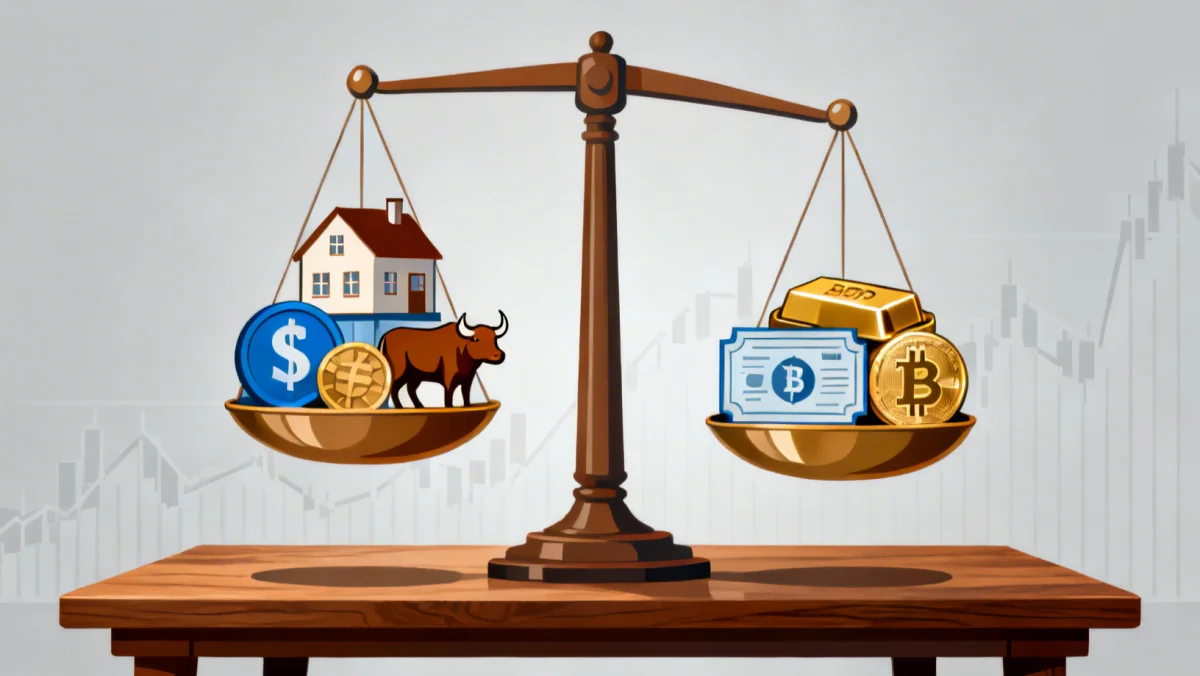
Investing in a diversified investment portfolio is key to mitigating risk and maximizing returns.
Treasury Inflation-Protected Securities (TIPS)
TIPS are government-issued bonds whose principal value adjusts with the rate of inflation, as measured by the CPI. When inflation rises, the principal value of your TIPS increases, and so do the interest payments you receive. This direct link to inflation makes TIPS one of the most reliable tools for preserving purchasing power.
- Inflation Adjustment: Principal value increases with CPI, protecting against erosion of purchasing power.
- Interest Payments: Receive fixed interest rate on the inflation-adjusted principal, providing a real return.
- Safety: Backed by the full faith and credit of the U.S. government, offering low credit risk.
Given the potential for sustained inflation in 2026, TIPS can provide a foundational layer of protection for a significant portion of your savings, ensuring at least a real return above zero, and often above 3.5% when combined with other strategies.
High-Yield Corporate Bonds
While TIPS offer inflation protection, high-yield corporate bonds, also known as ‘junk bonds,’ can offer significantly higher nominal returns. These bonds are issued by companies with lower credit ratings, meaning they carry a higher risk of default. However, this higher risk is compensated by higher interest rates, which can be attractive in a moderately inflationary environment.
To mitigate the risks associated with individual high-yield bonds, investors often opt for high-yield bond ETFs or mutual funds. These diversified funds spread the risk across numerous issuers, making them a more accessible option for many investors. Careful due diligence on the fund’s holdings and management is essential to ensure a robust strategy that aims for returns above 3.5% while managing risk.
Dividend Growth Stocks and Value Investing
In a landscape where inflation erodes cash value, dividend growth stocks and a value investing approach can be highly effective for inflation-proofing your savings in 2026. Companies that consistently increase their dividends tend to be financially strong, with stable cash flows that can withstand inflationary pressures. Value investing, focusing on undervalued companies, offers potential for capital appreciation as the market corrects its perception.
These strategies aim to provide both income and capital growth, often outperforming inflation over the long term. The key lies in identifying companies with competitive advantages, strong balance sheets, and a history of shareholder-friendly policies.
Identifying Strong Dividend Growth Stocks
Dividend growth stocks are equities of companies that have a track record of regularly increasing their dividend payouts. These are often established companies in essential sectors, such as consumer staples, utilities, or healthcare, which tend to perform well regardless of economic cycles.
- Consistent Dividend Increases: Look for companies with a long history of raising dividends, indicating financial health.
- Strong Cash Flow: Ensure the company generates sufficient cash to cover its dividend payments and future growth.
- Competitive Advantage: Companies with a ‘moat’ (e.g., strong brand, patents, network effects) are better positioned to maintain profitability.
Investing in these companies can provide a growing income stream that helps offset inflation, while also offering the potential for capital gains as the stock price appreciates. Many dividend aristocrats and champions have delivered total returns well above 3.5% over extended periods.
The Value Investing Approach
Value investing involves buying stocks that appear to be trading for less than their intrinsic value. This approach often involves thorough fundamental analysis to identify companies that are temporarily out of favor but have solid underlying businesses. When the market eventually recognizes their true worth, there is potential for significant capital appreciation.
In an inflationary environment, value stocks can be particularly attractive because their assets and earnings are often more tangible and less susceptible to speculative bubbles. By focusing on companies with low price-to-earnings ratios, strong balance sheets, and durable business models, investors can position themselves for substantial returns that comfortably exceed the 3.5% target.
Alternative Investments: Private Equity and Infrastructure
For sophisticated investors looking to further diversify and enhance their portfolio’s inflation-proofing capabilities, alternative investments like private equity and infrastructure can offer unique advantages in 2026. These asset classes often have a lower correlation with traditional public markets and can provide stable, long-term returns that are resilient to inflationary pressures.
Accessing these investments typically requires a higher capital commitment and often comes with less liquidity. However, their potential for superior risk-adjusted returns and inflation-hedging characteristics makes them worth considering for a well-rounded strategy.
Private Equity and Venture Capital
Private equity involves investing in companies that are not publicly traded. This can include venture capital (investing in startups), growth equity (investing in mature but growing companies), and leveraged buyouts (acquiring established companies). Private equity funds aim to improve the operational efficiency and strategic direction of their portfolio companies, ultimately selling them for a profit.
- Higher Return Potential: Historically, private equity has generated higher returns than public markets, compensating for illiquidity.
- Direct Influence: Investors can have a more direct impact on company performance.
- Inflation Resilience: Investments can be in sectors less sensitive to public market fluctuations, or in companies that can pass on increased costs.
While the illiquidity and high entry barriers are significant, the potential for outsized returns, often exceeding the 3.5% target by a considerable margin, makes private equity an attractive option for those with the appropriate risk tolerance and investment horizon.
Infrastructure Investments
Infrastructure assets include essential services and facilities such as toll roads, bridges, airports, utilities, and communication networks. These assets often have long operating lives, generate stable cash flows, and frequently possess pricing power, allowing them to adjust fees and charges with inflation.
Investing in infrastructure can be done directly, through specialized funds, or via publicly traded infrastructure companies and ETFs. The essential nature of these services means demand remains relatively stable, providing a predictable revenue stream that can effectively combat inflation. Many infrastructure projects also benefit from government backing or long-term contracts, adding a layer of stability.
The consistent cash flows and ability to pass on costs make infrastructure an excellent component for inflation-proofing your savings in 2026. These investments typically offer stable yields and capital appreciation potential, often well above 3.5%, making them a strong candidate for long-term investors.
Strategic Asset Allocation and Diversification
No single investment vehicle provides a complete solution for inflation-proofing your savings. The most effective strategy for 2026 involves strategic asset allocation and robust diversification across various asset classes. By spreading investments across different sectors and types of assets, you can mitigate risks and enhance the potential for consistent returns above 3.5%.
Diversification means not putting all your eggs in one basket. It involves combining assets that react differently to economic conditions. For instance, while real estate might thrive in an inflationary environment, certain growth stocks might struggle if interest rates rise too sharply. A balanced portfolio ensures that some assets are always performing well, even if others are under pressure.
Building a Diversified Portfolio
A well-diversified portfolio should include a mix of the inflation-hedging assets discussed, tailored to your individual risk tolerance and financial goals. Consider a blend of:
- Real Estate: Through REITs or direct ownership for appreciation and rental income.
- Commodities/Precious Metals: For direct inflation protection and safe-haven properties.
- TIPS and High-Yield Bonds: For capital preservation and enhanced income.
- Dividend Growth/Value Stocks: For income growth and capital appreciation.
- Alternative Investments: For enhanced returns and uncorrelated exposure (if suitable).
Regularly rebalancing your portfolio is also crucial. As market conditions change, the weight of certain assets in your portfolio may shift. Rebalancing involves selling assets that have overperformed and buying those that have underperformed to maintain your desired asset allocation. This disciplined approach ensures you stay on track to achieve your inflation-proofing goals.
By carefully constructing and maintaining a diversified portfolio, investors can enhance their chances of achieving returns above 3.5% and effectively protect their savings from the erosive effects of inflation in 2026 and beyond. This proactive and strategic approach is fundamental to long-term financial security.
| Investment Vehicle | Inflation-Hedging Benefit |
|---|---|
| Real Estate (REITs/Direct) | Property values and rental income tend to rise with inflation. |
| Commodities/Precious Metals | Intrinsic value often increases with rising production costs and demand. |
| TIPS (Treasury Inflation-Protected Securities) | Principal value adjusts directly with the Consumer Price Index (CPI). |
| Dividend Growth Stocks | Companies often have pricing power and increase dividends, outpacing inflation. |
Frequently Asked Questions About Inflation-Proofing
Inflation-proofing refers to strategies designed to protect the purchasing power of your savings from erosion due to rising prices. For 2026, it’s crucial because economic forecasts suggest moderate to high inflation, making traditional savings inadequate for maintaining or growing wealth over time.
Yes, real estate, both direct ownership and REITs, has a strong historical correlation with inflation. Property values and rental income tend to increase with inflation, often providing returns well above 3.5%, especially in strategic growth markets or through well-managed REITs.
TIPS (Treasury Inflation-Protected Securities) are designed to provide a real return above inflation, as their principal adjusts with the CPI. While they protect against inflation, their yield above inflation might be modest, making them a foundational component rather than a sole strategy for high returns.
High-yield bonds carry a higher risk of default compared to investment-grade bonds, as they are issued by companies with lower credit ratings. However, they offer higher interest rates to compensate for this risk. Diversifying through high-yield bond funds can help mitigate individual company risk.
Diversification is critically important. No single asset class performs optimally in all economic conditions. A diversified portfolio, combining various inflation-hedging assets, spreads risk and increases the likelihood of achieving consistent returns above 3.5% regardless of specific market fluctuations.
Conclusion
Successfully inflation-proofing your savings in 2026 requires a proactive, informed, and diversified investment strategy. As economic uncertainties persist and inflation remains a key concern, relying solely on traditional savings methods simply won’t suffice. By strategically allocating your capital across a mix of real estate, commodities, inflation-protected securities, dividend growth stocks, and potentially alternative investments, you can build a robust portfolio designed to not only preserve but also grow your wealth, consistently targeting returns above 3.5%. The key is continuous monitoring, informed decision-making, and a commitment to adapting your strategy as the economic landscape evolves.