2026 Dual Enrollment Programs: Earn College Credits Early

Exploring 2026 Dual Enrollment Programs: Earn College Credits While in High School allows students to simultaneously earn high school and college credits, providing a significant head start on their higher education journey and potential cost savings.
Are you a high school student in 2026 looking for an edge in your academic journey? Exploring 2026 Dual Enrollment Programs: Earn College Credits While in High School could be your golden ticket. This innovative educational pathway allows you to tackle college-level courses, earning credits that count towards both your high school diploma and a future college degree. It’s an opportunity to accelerate your academic progress, potentially save thousands of dollars on tuition, and gain invaluable experience with higher education demands well before officially stepping onto a college campus. Let’s delve into what these programs entail and how you can make the most of them.
Understanding Dual Enrollment in 2026
Dual enrollment programs, sometimes referred to as concurrent enrollment, have become a cornerstone of modern education, offering ambitious high school students a unique pathway to academic acceleration. In 2026, these programs are more refined and accessible than ever, integrating seamlessly with high school curricula and college academic calendars. They are designed to bridge the gap between secondary and post-secondary education, providing a taste of college life and rigor while still within the supportive environment of high school.
The core concept is simple: students take college courses, often taught by college professors, either at their high school, a local college campus, or increasingly, online. These courses are typically rigorous, mirroring the academic demands of a freshman or sophomore year at a university. Successful completion of these courses results in credits that satisfy both high school graduation requirements and college degree requirements, effectively streamlining a student’s educational timeline.
The Evolution of Dual Enrollment
Over the past decade, dual enrollment has evolved significantly, moving beyond traditional classroom settings. The advent of advanced online learning platforms and hybrid models means that students in 2026 have more flexibility in how and when they access these college-level courses. This expansion has made dual enrollment a viable option for a broader range of students, including those in rural areas or with demanding extracurricular schedules. Furthermore, many states and educational institutions have increased funding and support for these programs, recognizing their immense value.
- Increased online course offerings for flexibility.
- Enhanced partnerships between high schools and colleges.
- Broader range of subjects, from STEM to humanities.
- Improved academic advising for dual enrollment students.
The continuous growth and adaptation of dual enrollment programs underscore their importance in preparing the next generation for the challenges and opportunities of higher education. Understanding the structure and benefits of these programs is the first step toward leveraging them effectively for academic and financial advantage.
Key Benefits of 2026 Dual Enrollment Programs
Engaging with 2026 Dual Enrollment Programs offers a multitude of advantages that extend far beyond simply earning college credits early. These programs are strategically designed to provide a holistic boost to a student’s academic profile, financial standing, and overall readiness for higher education. For many, it’s a transformative experience that sets the stage for future success.
One of the most immediate and tangible benefits is the significant financial savings. College tuition costs continue to escalate, making any opportunity to reduce the total cost of a degree incredibly valuable. By earning credits in high school, students can potentially shave off an entire semester or even a full year of college tuition, room, and board. This financial relief can alleviate a substantial burden on families and students alike, making higher education more accessible and less daunting.
Academic Acceleration and Preparedness
Beyond cost savings, dual enrollment provides unparalleled academic acceleration. Students who participate often find themselves entering college as sophomores, equipped with a foundation of college-level coursework already completed. This head start allows them to pursue advanced degrees sooner, engage in specialized research, or even explore internships earlier in their college careers. More importantly, it prepares them for the academic rigor of university life.
- Reduced college tuition and associated costs.
- Earlier college graduation opportunities.
- Exposure to college-level academics and expectations.
- Stronger college applications and scholarship prospects.
Students gain confidence in their ability to handle challenging coursework and develop essential study habits necessary for success in higher education. This early exposure helps demystify college, making the transition smoother and less stressful. The experience also allows students to explore various fields of study, helping them make more informed decisions about their major and career path.
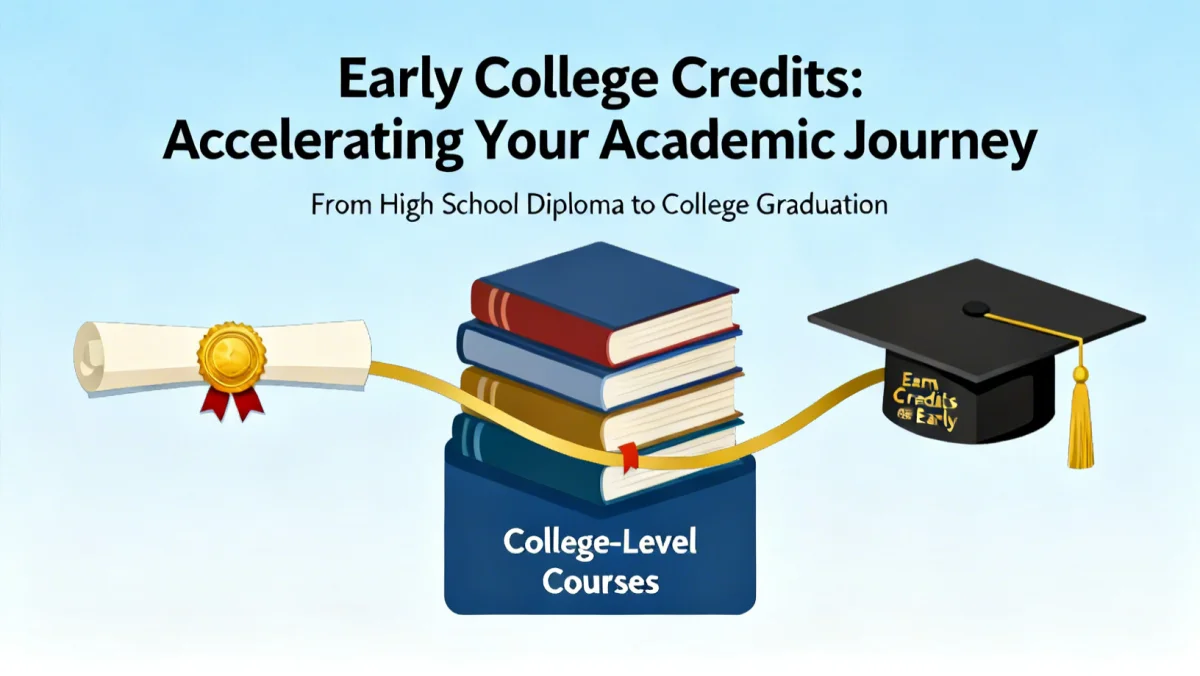
Furthermore, having college credits on their transcript makes students more attractive to competitive universities. It signals to admissions committees that the applicant is serious about their education, capable of handling advanced work, and proactive in pursuing academic excellence. This can significantly enhance their chances of admission to their top-choice institutions and qualify them for a wider range of scholarships and grants.
Eligibility and Application Process for 2026
To participate in 2026 Dual Enrollment Programs, students must meet specific eligibility criteria, which can vary depending on the high school, the partnering college, and state regulations. Generally, these programs are designed for academically strong students who demonstrate the maturity and readiness for college-level work. Understanding these requirements and the application process is crucial for prospective participants.
Common eligibility requirements often include a minimum GPA, usually around 2.5 to 3.0 on a 4.0 scale, though some more competitive programs may require higher. Standardized test scores, such as PSAT, SAT, or ACT, might also be considered, or specific placement tests administered by the college. Beyond academic metrics, schools often look for students who exhibit strong motivation, good organizational skills, and the ability to manage increased academic workload alongside their regular high school commitments.
Navigating the Application Journey
The application process typically begins with counseling from a high school advisor. They can provide detailed information about available programs, specific eligibility rules, and application deadlines. Students will usually need to submit an application to the college, often including their high school transcripts, letters of recommendation, and a personal statement outlining their interest and academic goals.
- Consult your high school counselor early.
- Prepare all necessary academic documents.
- Meet application deadlines meticulously.
- Understand specific program requirements for each college.
It is important to note that some programs may have limited spots, making early application beneficial. Students should also inquire about any associated fees, although many dual enrollment programs offer reduced tuition rates or are entirely free, especially at community colleges. Thoroughly reviewing the program’s guidelines on credit transferability is also a critical step, ensuring the earned credits will be accepted by their future institution.
The application process, while seeming complex, is a valuable exercise in preparing for future college admissions. It teaches students how to gather necessary documents, articulate their academic aspirations, and meet deadlines, all of which are essential skills for higher education.
Choosing the Right Dual Enrollment Courses
Selecting the appropriate courses within 2026 Dual Enrollment Programs is a pivotal decision that can significantly impact a student’s academic trajectory and future college plans. It’s not merely about accumulating credits, but about choosing courses that align with academic interests, future major goals, and institutions’ transfer policies. A strategic approach to course selection can maximize the benefits of dual enrollment.
Students should start by considering their academic strengths and passions. Are they drawn to STEM fields, humanities, arts, or business? Opting for courses in subjects they genuinely enjoy and excel in can lead to greater success and a more positive learning experience. These foundational courses, such as College Algebra, English Composition, or Introduction to Psychology, are often universally transferable and can fulfill general education requirements at most universities.
Strategic Course Selection for Future Success
It is also wise to research the general education requirements of colleges they are considering for their bachelor’s degree. Many universities publish their general education curriculum online, providing a roadmap for course selection. Prioritizing courses that fulfill these requirements can ensure that the dual enrollment credits seamlessly transfer and contribute directly to their degree.
- Align courses with your academic interests.
- Prioritize general education requirements.
- Verify credit transferability with prospective colleges.
- Avoid overloading your schedule with too many difficult courses.
Furthermore, students should discuss their course selections with their high school counselor and, if possible, a college academic advisor. These professionals can offer invaluable insights into course rigor, instructor quality, and transfer agreements. They can also help students create a balanced schedule, ensuring they don’t overcommit and can maintain a healthy work-life balance while still in high school.
Ultimately, the goal is to choose courses that are challenging yet manageable, relevant to future academic pursuits, and transferable to the institutions they plan to attend. Thoughtful course selection transforms dual enrollment from a simple credit-earning opportunity into a powerful tool for academic and career preparation.
Maximizing Your Dual Enrollment Experience
Successfully navigating 2026 Dual Enrollment Programs involves more than just enrolling in courses; it requires a proactive approach to learning, time management, and leveraging available resources. To truly maximize the experience, students should embrace the college environment, even if they are taking classes remotely or at their high school. This means adopting college-level study habits and seeking out support systems.
One critical aspect is developing strong time management skills. College courses often demand more independent study and self-discipline than high school classes. Students will need to balance their dual enrollment coursework with their high school obligations, extracurricular activities, and personal life. Creating a consistent study schedule, utilizing planners, and breaking down large assignments into smaller, manageable tasks can be incredibly helpful.
Engaging with College Resources
Even as high school students, dual enrollees often have access to a variety of college resources. These can include academic advising, tutoring centers, libraries, and career services. Taking advantage of these resources can provide essential support, enhance learning, and offer a glimpse into the broader college experience. For example, visiting the college library can introduce students to academic research tools they will use throughout their higher education journey.
- Develop effective time management strategies.
- Utilize college academic support services (tutoring, advising).
- Actively participate in class discussions and projects.
- Network with professors and college students.
Building relationships with professors is another valuable aspect. Attending office hours, asking thoughtful questions, and engaging in class discussions can deepen understanding of the subject matter and potentially lead to mentorship opportunities or strong letters of recommendation for future applications. Networking with college students can also provide insights into college life and academic expectations, making the eventual transition smoother.
By actively engaging with the academic and social aspects of their dual enrollment experience, students can gain far more than just credits. They can develop critical thinking skills, build a robust academic network, and cultivate the independence and self-reliance necessary for success in college and beyond.
Future Outlook: Dual Enrollment Beyond 2026
As we look beyond 2026 Dual Enrollment Programs, the landscape of early college credit opportunities is poised for continued growth and innovation. The trend toward blurring the lines between high school and college is only expected to accelerate, driven by technological advancements, evolving educational philosophies, and the increasing demand for skilled graduates. This forward momentum suggests even greater accessibility and diversification of dual enrollment options in the coming years.
One significant area of development will likely be the integration of artificial intelligence and personalized learning pathways within dual enrollment curricula. AI tools could help identify students best suited for specific college-level courses, offer tailored support, and even adapt course content to individual learning styles. This personalization could make dual enrollment even more effective and inclusive, catering to a wider range of student needs and academic backgrounds.
Expanding Opportunities and Specializations
We can also anticipate an expansion in the types of specialized programs available. Beyond general education courses, there will likely be more opportunities for high school students to pursue dual enrollment in niche fields, such as cybersecurity, advanced robotics, digital media production, or even pre-professional tracks like early nursing or engineering pathways. These specialized programs will provide an even stronger foundation for students entering specific career fields.
- Increased use of AI for personalized learning.
- Broader range of specialized dual enrollment programs.
- Enhanced financial aid and scholarship opportunities.
- Greater emphasis on career-aligned dual enrollment.
Furthermore, policy changes and increased funding at both state and federal levels could make dual enrollment even more affordable and widespread. Efforts to address educational equity may lead to programs specifically designed to support underserved student populations, ensuring that the benefits of early college credit are accessible to all. The focus will shift towards creating seamless educational pipelines from high school through higher education and into the workforce.
The future of dual enrollment is bright, promising a more integrated, personalized, and accessible educational experience for high school students. These programs will continue to be a vital tool in preparing the next generation for the complexities of a rapidly changing world, equipping them with the academic foundations and practical skills needed to thrive.
| Key Aspect | Brief Description |
|---|---|
| Credit Earning | Earn both high school and college credits simultaneously. |
| Cost Savings | Potentially reduce overall college tuition costs significantly. |
| Academic Prep | Gain early exposure to college-level rigor and expectations. |
| Transferability | Ensure credits transfer to your intended future college. |
Frequently Asked Questions About Dual Enrollment
Dual Enrollment Programs in 2026 allow high school students to take college-level courses and earn credits that count towards both their high school diploma and a future college degree. These courses can be taught at the high school, a college campus, or online, providing flexibility and an academic head start.
Eligibility typically requires a minimum GPA, often between 2.5 and 3.0, and sometimes specific standardized test scores or placement test results. Students also need to demonstrate academic maturity and the ability to manage the increased workload. Check with your high school counselor for specific local requirements.
While many dual enrollment credits are widely accepted, transferability is not always guaranteed. It’s crucial to verify with each prospective college or university their specific policies on accepting dual enrollment credits. General education courses often have the highest transfer success rates.
Dual enrollment can significantly reduce the overall cost of a college degree by allowing students to complete credits at a lower cost, or sometimes for free, while in high school. This can lead to graduating earlier from college, saving on tuition, room, and board expenses.
Students can maximize their experience by developing strong time management skills, utilizing college resources like tutoring and advising, actively participating in classes, and building relationships with professors. Strategic course selection aligned with future academic goals is also key to success.
Conclusion
Exploring 2026 Dual Enrollment Programs: Earn College Credits While in High School stands as a powerful testament to the evolving landscape of education, offering an unparalleled opportunity for ambitious students to gain a significant advantage. From the tangible financial savings to the invaluable academic preparedness and enhanced college readiness, these programs provide a robust foundation for future success. By carefully navigating eligibility, strategically selecting courses, and proactively engaging with the college environment, students can transform their high school experience into a springboard for higher education. As we look ahead, the continuous innovation in dual enrollment promises even more personalized and accessible pathways, ensuring that the next generation of learners is well-equipped to meet the demands of an ever-changing world. Embracing dual enrollment is not just about earning credits; it’s about investing in a brighter, more efficient, and more fulfilling academic journey.