Supreme Court’s 2025-2026 Term: Judicial Review of 4 Landmark Cases
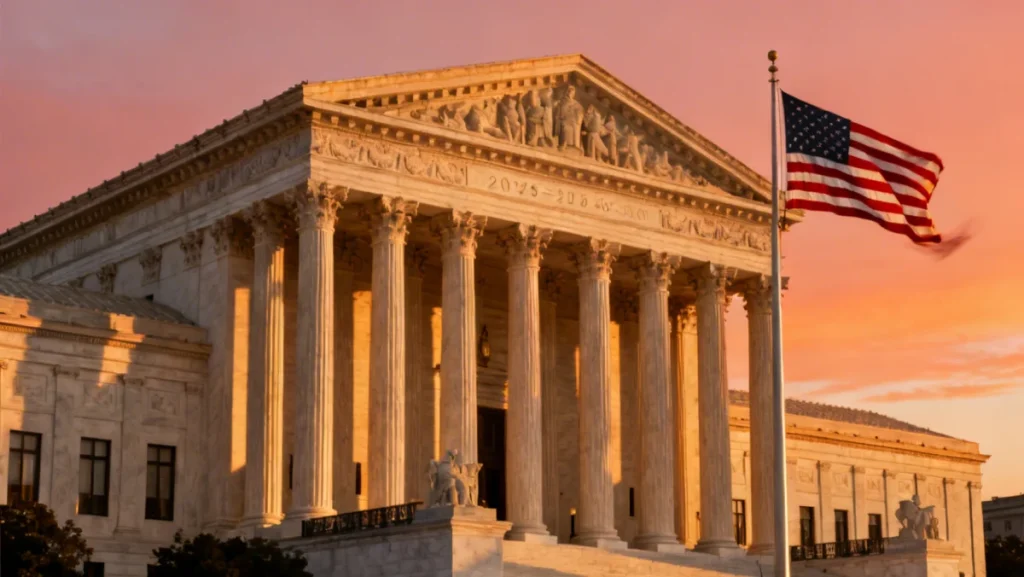
The Supreme Court is poised to conduct significant judicial review during its 2025-2026 term, focusing on four landmark cases that will shape constitutional law and societal norms across the United States.
The upcoming 2025-2026 term of the Supreme Court promises to be a pivotal period, with four landmark cases slated for intensive Supreme Court Judicial Review. These cases are not merely legal curiosities; they represent critical junctures that could redefine fundamental rights, governmental powers, and the fabric of American society. Understanding these developments is crucial for legal professionals, policymakers, and engaged citizens alike.
Understanding the Scope of Judicial Review
Judicial review stands as a cornerstone of the American legal system, empowering the Supreme Court to assess the constitutionality of legislative acts and executive actions. This power, though not explicitly defined in the Constitution, was firmly established in Marbury v. Madison and has since evolved to become a vital check on governmental authority. The upcoming term will once again highlight the profound implications of this power.
The Court’s role in judicial review extends beyond simply striking down unconstitutional laws. It involves interpreting statutes, clarifying constitutional ambiguities, and setting precedents that guide lower courts and future legislation. The decisions rendered can resonate for decades, influencing everything from individual liberties to economic regulations.
The Historical Precedent of Marbury v. Madison
- Establishment of Authority: In 1803, Chief Justice John Marshall’s opinion in Marbury v. Madison solidified the Supreme Court’s power to declare an act of Congress unconstitutional.
- Checks and Balances: This decision was instrumental in defining the system of checks and balances, ensuring no single branch of government becomes too powerful.
- Enduring Legacy: Marbury’s principles continue to underpin the Court’s authority, making judicial review a fundamental aspect of American jurisprudence.
The forthcoming cases will test the boundaries and applications of judicial review in contemporary contexts. The Court’s approach to these complex issues will undoubtedly be scrutinized, as each decision carries significant weight and potential for widespread impact. This foundational understanding is essential for appreciating the gravity of the 2025-2026 term.
Case 1: Redefining Digital Privacy in the Age of AI
The first landmark case on the docket for the 2025-2026 term, tentatively titled Smith v. United Technologies, delves into the intricate relationship between emerging artificial intelligence technologies and individual digital privacy rights. This case challenges the scope of governmental access to data processed by advanced AI systems, raising critical questions about the Fourth Amendment in a rapidly evolving technological landscape.
As AI becomes increasingly integrated into daily life, collecting and analyzing vast amounts of personal data, the legal frameworks governing privacy have struggled to keep pace. This case seeks to establish clearer guidelines on what constitutes a reasonable expectation of privacy when data is handled by sophisticated algorithms and whether existing warrant requirements adequately address these new forms of data collection.
Key Arguments and Potential Outcomes
- Government’s Stance: Advocates for broader governmental access often cite national security concerns and the need for effective law enforcement tools to combat sophisticated cyber threats.
- Privacy Advocates: Opponents argue that unchecked access to AI-processed data could lead to pervasive surveillance, chilling effects on free speech, and potential for discrimination.
- Technological Nuances: The Court will likely grapple with the technical complexities of AI, including how data is anonymized, aggregated, and used for predictive analysis, and whether these processes fundamentally alter privacy expectations.
The outcome of Smith v. United Technologies could significantly redefine digital privacy rights for millions of Americans, impacting everything from consumer data protection to the future development and regulation of AI technologies. Practical solutions emerging from this decision might include new legislative mandates for data handling or clearer judicial standards for obtaining warrants in AI-driven investigations.
Case 2: The Future of Environmental Regulation and Federal Authority
The second landmark case, State of Verde v. Environmental Protection Agency, presents a direct challenge to the extent of federal regulatory authority over environmental protection, particularly concerning climate change initiatives. This case questions the EPA’s power to implement broad regulations that affect state economies and industries, reigniting debates over federalism and the delegation of legislative power.
This dispute arises from a new set of federal regulations aimed at significantly reducing carbon emissions across various sectors. Several states argue that these regulations overstep the EPA’s statutory authority and infringe upon states’ rights to manage their own resources and economic development. The case will force the Court to revisit its interpretation of foundational environmental laws.
Implications for Climate Policy and State Sovereignty
The Court’s decision will have profound implications for the future of environmental policy in the United States. A ruling limiting federal power could significantly hinder national efforts to combat climate change, leaving states with greater autonomy but potentially fragmented and less effective environmental protections. Conversely, upholding the EPA’s authority could solidify the federal government’s role in addressing nationwide environmental challenges.
Moreover, this case will clarify the balance between federal agencies’ delegated powers and Congress’s legislative prerogatives. The Court will scrutinize whether the EPA’s actions fall within the scope of its enabling statutes or if they constitute an overreach, effectively making policy rather than executing it. The practical solutions here might involve clearer legislative language from Congress or a re-evaluation of agency rulemaking processes to ensure they align with constitutional limits.

Case 3: Redistricting, Voting Rights, and the Electoral Map
The third critical case, Fair Elections Alliance v. State Legislature of Meridian, addresses contentious issues of partisan gerrymandering and voting rights, with the potential to significantly reshape electoral maps and political representation for the coming decades. This case specifically challenges a newly drawn congressional district map, alleging it was designed to dilute the voting power of certain demographic groups and entrench one political party’s control.
Redistricting, occurring every ten years after the census, is often a highly politicized process. While the Supreme Court has previously intervened in cases of racial gerrymandering, its stance on partisan gerrymandering has been more varied. This case offers an opportunity for the Court to provide clearer guidance on the constitutional limits of political map-drawing and its impact on the principle of one person, one vote.
Arguments for and Against Partisan Gerrymandering
- Proponents of Existing Maps: Often argue that partisan considerations are an inherent part of the political process and that courts should not intervene in what they consider a political question best left to state legislatures.
- Opponents and Advocates: Contend that extreme gerrymandering undermines democratic principles, disenfranchises voters, and leads to unrepresentative governments, calling for judicial intervention to ensure fair electoral processes.
- Legal Standards: The Court will likely examine various legal tests, such as the efficiency gap or other metrics, to determine whether the challenged map constitutes an unconstitutional partisan gerrymander.
The implications of this ruling are far-reaching, directly impacting the fairness and legitimacy of future elections. Practical solutions could range from mandating independent redistricting commissions to establishing clearer, judicially enforceable standards for drawing electoral boundaries. This case is crucial for the health of American democracy and the representation of its citizens.
Case 4: The Scope of Executive Power in Emergency Situations
The fourth landmark case, Presidential Powers Commission v. Executive Order 2025-07, centers on the contentious issue of executive power during declared national emergencies. This case scrutinizes the President’s authority to enact broad policies via executive order without direct congressional approval, specifically in response to a hypothetical severe economic downturn or public health crisis.
The executive branch has historically exercised significant power during times of crisis, but the precise limits of this authority remain a subject of ongoing debate. This case challenges an executive order that bypasses standard legislative processes, raising fundamental questions about the separation of powers and the checks and balances designed to prevent unilateral presidential action.
Balancing Efficiency with Constitutional Constraints
The core tension in this case lies between the need for swift and decisive executive action during emergencies and the constitutional imperative to prevent an overreach of presidential power. Arguments will likely focus on the definition of an emergency, the scope of inherent presidential powers, and the role of Congress in authorizing or limiting such actions. Precedents from past crises, both domestic and international, will undoubtedly be central to the legal arguments.
A ruling that broadly expands executive power could set a dangerous precedent, potentially leading to a more imperial presidency, while a restrictive ruling might hamper the government’s ability to respond effectively to future crises. Practical solutions could involve Congress establishing clearer statutory guidelines for presidential emergency powers or the Court defining more precise constitutional boundaries for executive orders, ensuring a delicate balance between efficiency and democratic accountability.
Recent Updates and Procedural Developments
As the 2025-2026 term approaches, several procedural developments and preliminary filings have already begun to shape the trajectory of these landmark cases. Amicus curiae briefs, filed by various interest groups and legal scholars, are pouring in, offering diverse perspectives and influencing the Court’s understanding of the broader societal impacts. These briefs often highlight practical solutions and potential consequences of different rulings.
Oral arguments are tentatively scheduled for early 2026, and legal observers are keenly watching for any indications of the justices’ leanings during pre-argument conferences. The composition of the Court, with its current ideological balance, will play a crucial role in the eventual outcomes. Each justice’s judicial philosophy, whether textualist, originalist, or living constitutionalist, will inform their interpretation of the complex legal questions presented.
Pre-Argument Briefs and Judicial Conferences
- Amicus Briefs: These ‘friend of the court’ briefs provide additional legal arguments and factual information, often from non-parties, to aid the justices in their decision-making process.
- Initial Filings: Parties have submitted their opening briefs, outlining their central legal arguments and citing relevant precedents.
- Judicial Deliberation: Behind-the-scenes, the justices and their clerks are meticulously reviewing all submitted materials, preparing for the intense oral arguments and subsequent deliberations that will define the term.
The legal community is actively dissecting every motion and procedural step, anticipating the potential shifts in legal doctrine. These updates are vital for understanding the evolving landscape of these cases and preparing for their eventual outcomes. The practical solutions for stakeholders often involve closely monitoring these developments to adapt strategies and anticipate legal changes.
Practical Solutions for Navigating Legal Changes
The anticipation surrounding the Supreme Court’s 2025-2026 term underscores the need for proactive engagement and strategic planning. For individuals, businesses, and governmental entities, understanding the potential ramifications of these landmark decisions is paramount. Developing robust practical solutions can help mitigate risks and capitalize on new opportunities arising from the Court’s rulings.
One primary solution involves continuous legal education and awareness. Staying informed about the nuances of each case, from oral arguments to dissenting opinions, can provide invaluable foresight. Legal departments and compliance officers should regularly update their protocols and training modules to reflect anticipated changes in law and policy. This proactive stance ensures readiness for any shifts in the legal landscape.
Strategies for Adaptation and Compliance
For businesses, this might mean re-evaluating data privacy policies in light of the AI case or reassessing environmental compliance strategies following the EPA ruling. For state governments, the outcomes of the redistricting and executive power cases will necessitate careful review of electoral processes and emergency response protocols. Collaboration between legal experts, industry leaders, and policymakers can foster innovative solutions tailored to specific challenges.
Furthermore, advocacy and public engagement remain crucial. While the Court’s decisions are final, their impact can be shaped by public discourse and subsequent legislative action. Engaging with advocacy groups, participating in public forums, and supporting legislative efforts that align with desired outcomes are all practical steps. The legal landscape is dynamic, and continuous adaptation is key to navigating its complexities effectively.
| Key Case | Brief Description |
|---|---|
| Digital Privacy (AI) | Challenges governmental access to data processed by advanced AI systems, redefining Fourth Amendment rights. |
| Environmental Regulation | Questions federal authority of the EPA over climate change initiatives and state economies. |
| Voting Rights (Gerrymandering) | Addresses partisan gerrymandering, potentially reshaping electoral maps and political representation. |
| Executive Power (Emergency) | Examines the President’s authority to enact broad policies via executive order during national emergencies. |
Frequently Asked Questions about the 2025-2026 Supreme Court Term
Judicial review is the Supreme Court’s power to declare legislative acts and executive actions unconstitutional. It’s crucial for maintaining the system of checks and balances, ensuring no single branch of government oversteps its authority, and protecting individual rights against governmental overreach.
The AI digital privacy case could redefine your rights regarding data collected and analyzed by artificial intelligence. It might establish new standards for government access to personal data, influencing everything from how tech companies handle your information to the legality of AI-driven surveillance.
This case could significantly alter federal environmental policy. A ruling limiting the EPA’s power might reduce national efforts to combat climate change, leaving more control to states. Conversely, upholding federal authority could strengthen nationwide environmental protections and regulatory oversight.
The redistricting case is vital because it addresses partisan gerrymandering, which can dilute voting power and create unrepresentative districts. The Court’s decision could lead to fairer electoral maps, ensuring that votes translate more accurately into representation and strengthening the democratic process.
The ruling on executive power during emergencies will define the President’s ability to act without congressional approval. It could either grant future presidents more unilateral authority during crises, potentially streamlining responses, or reinforce congressional checks, requiring broader consensus for emergency actions.
Conclusion
The Supreme Court’s 2025-2026 term is poised to be a period of intense judicial scrutiny and profound legal evolution. The four landmark cases concerning digital privacy, environmental regulation, voting rights, and executive power represent critical junctures for American jurisprudence. These decisions will not only interpret existing law but will also set precedents that shape the nation’s legal, social, and political landscape for years to come. Staying informed and preparing for these changes through proactive engagement and adaptive strategies will be essential for all stakeholders.