US Cyber Defenses 2025: Latest National Security Threats & Implications

The National Security Brief: The Latest Threat Assessments and Their Implications for U.S. Cyber Defenses in 2025 – RECENT UPDATES highlights an escalated and diversified cyber threat landscape requiring immediate and sustained advancements in national cybersecurity strategies and infrastructure protection.
The landscape of global security is continuously shifting, with digital frontiers now as critical as physical borders. In this context, the National Security Brief: The Latest Threat Assessments and Their Implications for U.S. Cyber Defenses in 2025 – RECENT UPDATES serves as an indispensable guide, illuminating the complex challenges and strategic imperatives facing the United States in the coming year. Understanding these evolving threats is not merely an academic exercise; it is fundamental to safeguarding national interests, critical infrastructure, and the privacy of American citizens.
Understanding the Evolving Cyber Threat Landscape
The digital realm has become a primary battleground for state-sponsored actors, cybercriminals, and hacktivist groups, each employing sophisticated tactics to exploit vulnerabilities. The rapid pace of technological innovation, while beneficial, also introduces new vectors for attack, making the task of securing cyberspace increasingly complex. This section delves into the multifaceted nature of these evolving threats, providing a foundational understanding for effective defense strategies.
The Rise of Advanced Persistent Threats (APTs)
Advanced Persistent Threats (APTs) continue to pose a significant danger, characterized by their stealth, persistence, and sophisticated methodologies. These groups, often state-sponsored, aim for long-term infiltration into networks to exfiltrate sensitive data or disrupt operations. Their targets typically include government agencies, defense contractors, and critical infrastructure entities.
- Sophisticated Tactics: APTs employ zero-day exploits, spear-phishing campaigns, and supply chain attacks.
- Long-Term Objectives: Their goals extend beyond immediate financial gain, focusing on espionage, sabotage, or intellectual property theft.
- Evasive Techniques: APTs are adept at evading detection, often remaining dormant within systems for extended periods.
The increasing sophistication of these actors demands a proactive and adaptive defense posture. Traditional perimeter defenses are often insufficient against their targeted and persistent attacks, necessitating a deeper focus on threat intelligence and internal network monitoring. Understanding the adversary’s motives and capabilities is paramount.
The Proliferation of Ransomware and Extortionware
Ransomware remains a pervasive and financially destructive threat, with attackers continually refining their techniques. Beyond merely encrypting data, modern ransomware operations often involve exfiltration of sensitive information, adding a layer of extortion. This double-extortion tactic increases pressure on victims to pay, as non-compliance can lead to public data leaks.
- Business Model Evolution: Ransomware-as-a-Service (RaaS) models have lowered the barrier to entry for cybercriminals.
- Targeted Attacks: Attackers increasingly focus on organizations with high-value data and limited downtime tolerance, such as healthcare and financial services.
- Supply Chain Impact: Attacks on third-party vendors can cascade, affecting numerous downstream organizations.
The financial and operational impact of ransomware is immense, often leading to significant recovery costs, reputational damage, and regulatory fines. Effective defenses require a multi-layered approach, combining robust backups, employee training, and advanced endpoint detection and response (EDR) solutions. The threat continues to evolve, pushing organizations to continuously update their security frameworks.
Geopolitical Implications and State-Sponsored Cyber Activities
Cyber warfare has become an integral component of geopolitical competition, with nations leveraging digital capabilities to achieve strategic objectives without direct military confrontation. The implications for U.S. national security are profound, as these activities can destabilize international relations, compromise intelligence, and undermine economic stability. This section explores the motivations and methods behind state-sponsored cyber campaigns and their broader geopolitical context.
Major State Actors and Their Cyber Capabilities
Several nations possess highly advanced cyber capabilities, actively engaging in espionage, intellectual property theft, and critical infrastructure reconnaissance. These activities are often conducted with a high degree of plausible deniability, making attribution and response challenging. The primary state actors include those from China, Russia, Iran, and North Korea, each with distinct operational methodologies and strategic goals.
- China: Focuses on economic espionage, intellectual property theft, and military modernization through cyber means.
- Russia: Known for disruptive attacks, disinformation campaigns, and interference in democratic processes.
- Iran: Engages in destructive attacks, particularly targeting financial institutions and critical infrastructure in the Middle East and beyond.
- North Korea: Primarily uses cyber operations for financial gain to circumvent international sanctions.
The motivations behind these state-sponsored actions are diverse, ranging from economic advantage and military superiority to political destabilization. These actors often operate within a gray zone, constantly testing the boundaries of international cyber norms and challenging traditional concepts of sovereignty. Understanding their evolving tactics is crucial for developing effective deterrence and defense mechanisms.
Impact on Critical Infrastructure and National Security
Attacks on critical infrastructure—such as energy grids, water treatment facilities, transportation networks, and financial systems—represent a severe threat to national security. Successful compromises could lead to widespread societal disruption, economic paralysis, and even loss of life. These systems are increasingly interconnected and digitized, expanding their attack surface.
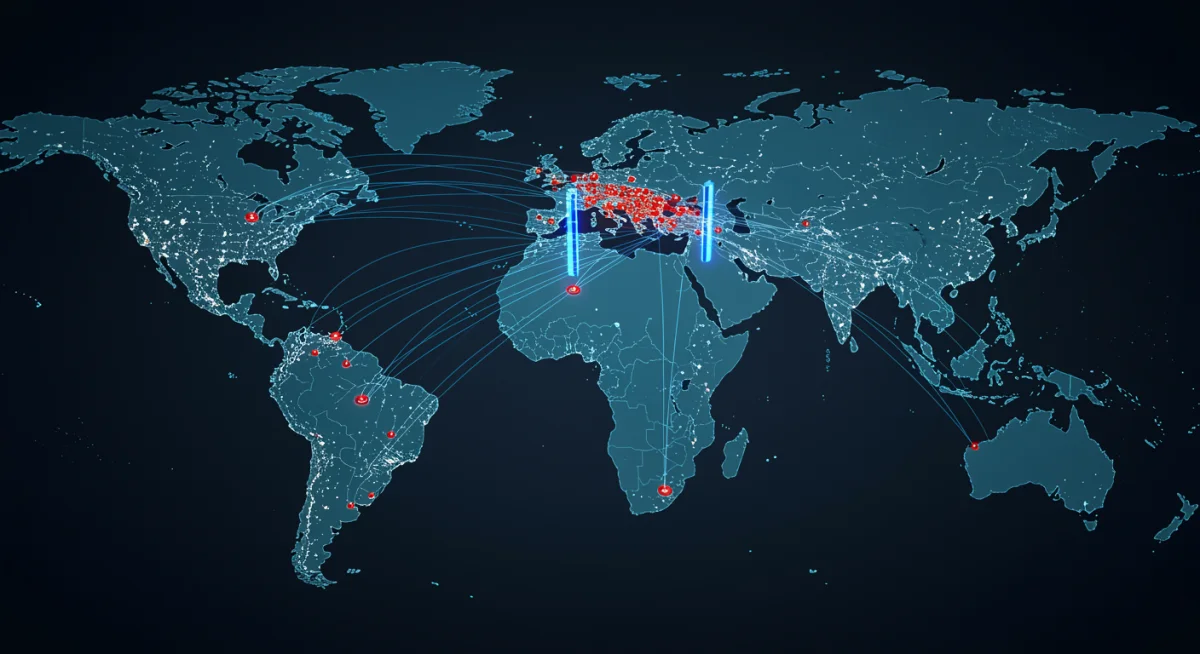
The U.S. government, in collaboration with the private sector, is continuously working to bolster the resilience of these vital systems. This involves not only technical safeguards but also robust information sharing and incident response planning. The interconnectedness of modern infrastructure means that a vulnerability in one sector can quickly propagate, affecting others. Therefore, a holistic approach to critical infrastructure protection is essential. The potential for kinetic effects from cyber-attacks adds a new dimension to national security planning, blurring the lines between cyber and conventional warfare.
Implications for U.S. Cyber Defenses in 2025
Given the escalating threat landscape, the implications for U.S. cyber defenses in 2025 are profound, demanding a comprehensive and adaptive strategy. The nation must not only enhance its defensive capabilities but also foster greater collaboration across government, industry, and international partners. This section outlines the critical areas where focus and investment are most needed to secure the digital future of the United States.
Strengthening Federal Cybersecurity Infrastructure
Federal agencies are prime targets for sophisticated cyber adversaries, making the resilience of their networks paramount. Significant investment in modernizing legacy systems, adopting zero-trust architectures, and enhancing threat intelligence capabilities is crucial. The establishment of the Cybersecurity and Infrastructure Security Agency (CISA) has been a vital step, but continuous evolution is necessary.
- Zero-Trust Architecture: Implementing a ‘never trust, always verify’ model across all federal networks.
- Endpoint Detection and Response (EDR): Deploying advanced EDR solutions to provide real-time visibility and response capabilities.
- Cloud Security: Securing federal data and applications migrated to cloud environments, often a complex undertaking.
Beyond technological upgrades, strengthening federal cybersecurity also involves a significant focus on human capital. Recruiting, training, and retaining skilled cybersecurity professionals is a persistent challenge, demanding innovative approaches to workforce development and incentives. Regular audits and compliance checks are also essential to ensure adherence to best practices and evolving security standards. The goal is to build a federal digital perimeter that is not only robust but also capable of rapid adaptation to new threats.
Enhancing Public-Private Partnerships
The vast majority of critical infrastructure in the U.S. is owned and operated by the private sector, making robust public-private partnerships indispensable for national cyber defense. Information sharing, joint threat analysis, and coordinated incident response are vital to creating a unified front against cyber adversaries. These partnerships bridge the gap between government intelligence and private sector operational realities.
- Information Sharing and Analysis Centers (ISACs): Facilitating sector-specific threat intelligence exchange.
- Joint Cyber Defense Collaborative (JCDC): CISA’s initiative to unify cyber defense efforts across government and industry.
- Cybersecurity Best Practices: Promoting the adoption of common cybersecurity frameworks and standards within the private sector.
Effective collaboration requires trust, transparency, and a shared understanding of risks and responsibilities. Incentivizing private sector participation, such as through liability protections or tax credits for cybersecurity investments, can further strengthen these partnerships. The goal is to create a symbiotic relationship where government and industry effectively pool resources and expertise to defend against common adversaries. This collective defense approach is increasingly recognized as the most effective way to combat sophisticated, global cyber threats.
Emerging Technologies and Their Security Implications
The rapid advancement of emerging technologies presents both opportunities and challenges for U.S. cyber defenses. While these innovations can bolster defensive capabilities, they also introduce new vulnerabilities and expand the attack surface. Understanding the dual-use nature of these technologies is crucial for proactive security planning. This section examines how artificial intelligence, quantum computing, and 5G networks will shape the cybersecurity landscape in 2025.
Artificial Intelligence and Machine Learning in Cyber Warfare
Artificial intelligence (AI) and machine learning (ML) are rapidly transforming cyber warfare, offering both powerful defensive tools and sophisticated offensive capabilities. On the defensive side, AI can enhance threat detection, automate response, and identify anomalies with greater speed and accuracy than human analysts. However, adversaries are also leveraging AI to craft more potent attacks, including polymorphic malware and advanced phishing campaigns.
- AI for Defense: Automated threat hunting, behavioral anomaly detection, and predictive analytics.
- AI for Offense: Automated vulnerability scanning, AI-generated phishing content, and adaptive malware.
- Adversarial AI: Techniques to trick AI models, such as data poisoning and model evasion, posing new challenges for AI-driven security systems.
The ethical implications and potential for AI to accelerate the cyber arms race are significant considerations. Developing robust, explainable, and resilient AI-driven security systems is paramount. Furthermore, understanding how adversaries might use AI to scale their attacks requires continuous research and development in defensive AI. The integration of AI into cybersecurity is not just an enhancement but a fundamental shift in how battles are fought in cyberspace.
Quantum Computing and Post-Quantum Cryptography
Quantum computing, while still in its nascent stages, poses a long-term existential threat to current cryptographic standards. A sufficiently powerful quantum computer could potentially break many of the encryption algorithms that secure sensitive data, communications, and financial transactions today. This impending threat necessitates a proactive transition to post-quantum cryptography (PQC).
- Quantum Threat: The ability of quantum computers to break widely used public-key encryption algorithms (e.g., RSA, ECC).
- Post-Quantum Cryptography (PQC): Developing and deploying new cryptographic algorithms resistant to quantum attacks.
- “Harvest Now, Decrypt Later”: Adversaries may be collecting encrypted data today, intending to decrypt it once quantum computers are available.
The implications for national security are immense, particularly for classified information and long-term data protection. The U.S. government is actively working with NIST to standardize PQC algorithms and develop transition roadmaps. The challenge lies in the complexity of transitioning vast digital infrastructures to new cryptographic standards without introducing new vulnerabilities. This is a race against time, requiring sustained investment and international collaboration to ensure a secure post-quantum future.
Strategic Responses and Policy Directives
Addressing the complex and evolving cyber threat landscape requires not only technological advancements but also robust strategic responses and clear policy directives. The U.S. government is actively developing and implementing policies aimed at enhancing national cyber resilience, deterring adversaries, and fostering international cooperation. This section examines key policy initiatives and strategic frameworks guiding the nation’s cyber defense efforts.
The National Cybersecurity Strategy
The U.S. National Cybersecurity Strategy outlines a comprehensive approach to securing the nation’s digital infrastructure. It emphasizes five pillars: defending critical infrastructure, disrupting threat actors, driving public-private collaboration, investing in a resilient future, and forging international partnerships. This strategy serves as a blueprint for coordinated action across government agencies and with external stakeholders.
- Defending Critical Infrastructure: Prioritizing the protection of essential services and systems.
- Disrupting Threat Actors: Employing offensive and defensive measures to neutralize cyber adversaries.
- Investing in a Resilient Future: Promoting research, development, and workforce development in cybersecurity.
The strategy also highlights the importance of shared responsibility, recognizing that cybersecurity is a collective endeavor. It seeks to shift the burden of cybersecurity from individual users to those entities best positioned to bear it, such as technology manufacturers and service providers. Continuous refinement and adaptation of this strategy are necessary to keep pace with the dynamic threat environment, ensuring it remains relevant and effective in addressing emerging challenges.
International Cooperation and Deterrence
Cyber threats transcend national borders, making international cooperation an indispensable component of effective cyber defense. The U.S. actively engages with allies and partners to share threat intelligence, coordinate responses, and establish norms of responsible state behavior in cyberspace. Deterrence strategies, both through denial and punishment, are also critical to discouraging malicious cyber activities.
- Information Sharing Agreements: Bilateral and multilateral agreements to exchange threat data.
- Joint Cyber Exercises: Simulating cyber-attacks to improve collective response capabilities.
- Norms of Behavior: Promoting international consensus on acceptable conduct in cyberspace.
The challenge lies in achieving consensus among diverse nations with varying interests and capabilities. However, building strong alliances and fostering a common understanding of cyber threats strengthens collective security. Diplomatic efforts, coupled with the demonstration of robust defensive and retaliatory capabilities, are essential to deterring state-sponsored aggression in the digital domain. The goal is to create a stable and secure global cyberspace where all nations can thrive without fear of malicious intrusion.
Preparing for Future Cyber Challenges
The only constant in the cyber realm is change. As such, effective U.S. cyber defenses in 2025 and beyond must be predicated on a forward-looking approach, anticipating future challenges and investing in innovative solutions. This involves not only technological foresight but also strategic workforce development and a culture of continuous learning and adaptation. This section outlines key areas for future preparation and resilience building.
Cyber Workforce Development and Talent Retention
A persistent and growing challenge in cybersecurity is the shortage of skilled professionals. The demand for cyber talent far outstrips the supply, creating a critical gap in defense capabilities. Addressing this requires a multi-pronged approach, including education, training, and incentives to attract and retain top talent in both government and the private sector.
- Education Programs: Investing in K-12 STEM education and university cybersecurity programs.
- Reskilling Initiatives: Providing opportunities for professionals to transition into cybersecurity roles.
- Talent Incentives: Offering competitive salaries, benefits, and career advancement opportunities.
Beyond technical skills, fostering a culture of continuous learning and adaptability is crucial. The cyber threat landscape evolves rapidly, requiring professionals to constantly update their knowledge and skills. Government initiatives, such as scholarships and rotational programs, can help build a robust and resilient cyber workforce capable of meeting future challenges. A strong human element remains the most critical component of any effective cyber defense strategy.
Resilience and Adaptive Defense Strategies
Given that perfect prevention is unattainable, building resilience into U.S. cyber defenses is paramount. Resilience means the ability to withstand, detect, respond to, and recover from cyber-attacks with minimal disruption. This involves designing systems that are inherently secure, implementing robust incident response plans, and continuously testing and refining those plans against simulated threats.
- Incident Response Planning: Developing clear, actionable plans for detecting, containing, and eradicating threats.
- Business Continuity: Ensuring essential services can continue even during a significant cyber incident.
- Red Teaming and Penetration Testing: Regularly simulating attacks to identify and remediate vulnerabilities.
Adaptive defense strategies involve continuous monitoring, threat intelligence integration, and the ability to rapidly adjust security postures in response to new attack vectors. This proactive and flexible approach allows organizations to stay ahead of adversaries, rather than merely reacting to past attacks. Investing in automation and orchestration tools can further enhance the speed and efficiency of adaptive defenses. The ultimate goal is to create a cyber ecosystem that is not only secure but also inherently capable of absorbing and recovering from inevitable intrusions, minimizing their impact on national security.
The Role of Threat Intelligence in Proactive Defense
In the complex world of cybersecurity, knowledge is power. Threat intelligence acts as the eyes and ears of a nation’s defense, providing critical insights into adversaries’ motives, capabilities, and infrastructure. For U.S. cyber defenses in 2025, proactive defense hinges significantly on timely, accurate, and actionable threat intelligence. This intelligence allows defenders to move from a reactive posture to one that anticipates and mitigates threats before they fully materialize, significantly reducing the window of opportunity for attackers.
Gathering and Analyzing Threat Data
The collection of threat data comes from numerous sources, including open-source intelligence (OSINT), dark web monitoring, classified intelligence, commercial feeds, and internal network telemetry. The sheer volume of this data necessitates sophisticated analytical tools, often leveraging artificial intelligence and machine learning, to identify patterns, TTPs (Tactics, Techniques, and Procedures), and emerging attack vectors. The process involves filtering noise, correlating disparate pieces of information, and contextualizing findings to make them relevant to specific defense objectives.
- OSINT Utilization: Monitoring public forums, social media, and news for early indicators of campaigns.
- Dark Web Monitoring: Tracking hacker forums and marketplaces for stolen credentials, exploits, and attack planning.
- Network Telemetry: Analyzing internal network traffic, logs, and endpoint data for suspicious activities and indicators of compromise (IOCs).
Effective threat intelligence is not just about collecting data; it’s about transforming raw information into actionable insights. This requires skilled analysts who can interpret complex technical data and understand geopolitical contexts. The ability to quickly disseminate this intelligence to relevant stakeholders, from government agencies to critical infrastructure operators, is equally important for a unified defense. The goal is to build a comprehensive picture of the threat landscape, enabling informed decision-making at all levels.
Integrating Intelligence into Defensive Operations
The true value of threat intelligence is realized when it is seamlessly integrated into defensive operations. This means using intelligence to inform vulnerability management programs, update security controls, enhance incident response playbooks, and conduct proactive threat hunting. When intelligence is operationalized, it allows defenders to prioritize risks, allocate resources effectively, and strengthen their security posture against the most pressing threats.
- Proactive Threat Hunting: Using intelligence to search for hidden threats within networks based on known adversary TTPs.
- Security Control Optimization: Adjusting firewalls, intrusion detection systems, and other security tools based on current threat intelligence.
- Vulnerability Prioritization: Focusing remediation efforts on vulnerabilities actively exploited by known threat actors.
Furthermore, threat intelligence plays a crucial role in strategic planning, helping policymakers understand the long-term trends in cyber warfare and allocate resources for future capabilities. It informs decisions on R&D investments, workforce development needs, and international cooperation priorities. By continuously feeding intelligence back into the defensive cycle, U.S. cyber defenses can maintain an adaptive edge against adversaries, ensuring that security measures are always aligned with the most current and anticipated threats. This iterative process of intelligence gathering, analysis, and integration forms the backbone of a resilient national cybersecurity strategy.
| Key Point | Brief Description |
|---|---|
| Evolving Threats | APTs, ransomware, and state-sponsored attacks are growing in sophistication and frequency, targeting vital sectors. |
| Critical Infrastructure | U.S. critical infrastructure remains a primary target, demanding enhanced protection and resilience. |
| Emerging Technologies | AI, quantum computing, and 5G present both new defense capabilities and significant security challenges. |
| Strategic Responses | Policy directives, public-private partnerships, and international cooperation are crucial for effective deterrence and defense. |
Frequently Asked Questions About U.S. Cyber Defenses in 2025
The U.S. faces advanced persistent threats (APTs) from state-sponsored actors, pervasive ransomware campaigns, and sophisticated cybercriminal operations. These threats target critical infrastructure, government agencies, and private sector entities, aiming for espionage, sabotage, or financial gain.
AI enhances cyber defenses through automated threat detection, behavioral analytics, and faster incident response. However, adversaries also leverage AI for more sophisticated attacks, including polymorphic malware and advanced phishing, creating an ongoing arms race in cyberspace.
Most critical infrastructure is privately owned, making public-private partnerships essential. They facilitate vital information sharing, coordinated threat analysis, and unified incident response, creating a more resilient national defense against common cyber adversaries.
Post-quantum cryptography (PQC) refers to cryptographic algorithms designed to withstand attacks from future quantum computers. It’s crucial because current encryption standards could be broken by quantum machines, jeopardizing sensitive data and national security if a transition isn’t made proactively.
The U.S. is addressing the shortage through investments in STEM education, university cybersecurity programs, reskilling initiatives, and competitive incentives to attract and retain talent. This comprehensive approach aims to build a robust and skilled cyber workforce for future challenges.
Conclusion
The National Security Brief: The Latest Threat Assessments and Their Implications for U.S. Cyber Defenses in 2025 – RECENT UPDATES underscores an undeniable truth: the digital battlefront is continuously expanding and intensifying. The United States faces a dynamic array of threats, from state-sponsored espionage to financially motivated ransomware, all amplified by the integration of emerging technologies. Effective defense hinges on a multi-faceted approach that combines robust federal infrastructure, resilient public-private partnerships, strategic international cooperation, and a dedicated investment in human capital and cutting-edge technologies. Proactive threat intelligence and an adaptive defense posture are no longer optional but foundational to safeguarding national security and ensuring the resilience of critical systems. As 2025 unfolds, the nation’s capacity to innovate, collaborate, and adapt will ultimately define its success in navigating the complex cyber landscape.