2026 Lifelong Learning Trends: Top 5 Platforms for Professional Growth

The evolving professional landscape by 2026 necessitates a strong focus on continuous skill acquisition, making 2026 lifelong learning trends and platforms crucial for sustained career relevance and growth.
As we navigate towards 2026, the imperative for continuous learning has never been clearer. The world of work is transforming at an unprecedented pace, demanding that professionals constantly update their skills and knowledge. This article explores the defining 2026 lifelong learning trends and spotlights the top five platforms poised to redefine continuous professional development. Ready to stay ahead?
The Shifting Paradigm of Professional Development in 2026
By 2026, continuous professional development will move far beyond traditional workshops and seminars. The acceleration of technological advancements, particularly in artificial intelligence and automation, is creating a dynamic environment where skills can become obsolete rapidly. This forces individuals and organizations alike to embrace a proactive approach to learning, viewing it not as an obligation, but as a critical investment in future resilience and competitiveness.
This shift emphasizes a move from static, one-time training to agile, on-demand learning experiences. Learners are seeking platforms that offer flexibility, personalization, and immediate applicability to their roles. The demand for micro-credentials and skill-based certifications is also on the rise, reflecting a desire for tangible, verifiable proof of proficiency that can be quickly integrated into professional profiles and résumés.
The evolving nature of work, with an increasing prevalence of remote and hybrid models, further underscores the importance of accessible and engaging online learning solutions. These platforms must cater to a global workforce, offering diverse content and fostering communities of practice where learners can collaborate and share insights. The future of professional development is deeply intertwined with technological innovation and a comprehensive understanding of learner needs.
Personalized Learning Paths: The Core of Future Skill Acquisition
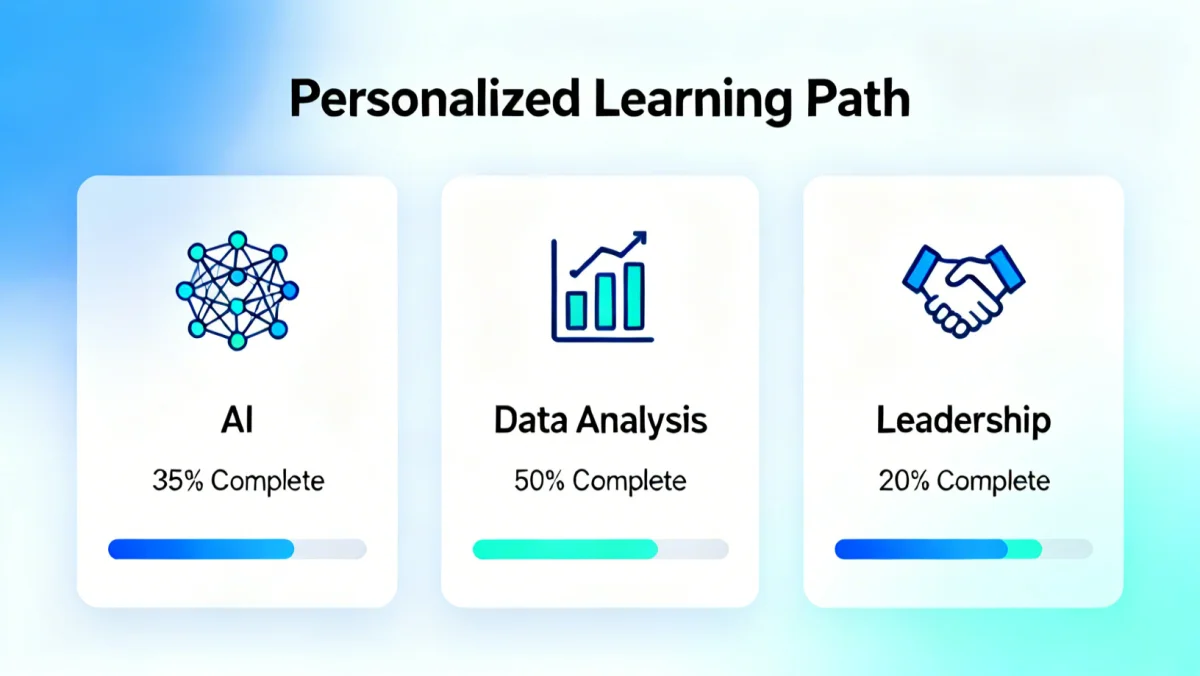
One of the most significant 2026 lifelong learning trends is the strong emphasis on personalized learning paths. Gone are the days of one-size-fits-all curricula. Modern professionals require educational experiences tailored to their specific career goals, existing skill sets, and learning styles. AI and machine learning are pivotal in enabling this level of customization, analyzing user data to recommend relevant courses, resources, and development activities.
AI-Driven Curriculum Customization
Platforms leveraging artificial intelligence can now assess a learner’s current competencies and identify skill gaps, then curate a bespoke learning journey. This not only maximizes efficiency but also enhances engagement, as individuals are presented with content directly relevant to their immediate needs and aspirations.
- Adaptive Content Delivery: AI dynamically adjusts learning materials based on a user’s progress and comprehension.
- Skill Gap Analysis: Tools pinpoint specific areas for improvement, guiding learners to targeted resources.
- Personalized Recommendations: Algorithms suggest courses and projects aligned with career trajectories.
The Role of Data Analytics in Tailored Education
Data analytics plays a crucial role in understanding learner behavior and optimizing the learning process. By tracking engagement, completion rates, and performance, platforms can continuously refine their offerings, ensuring that the personalized paths remain effective and relevant. This iterative improvement cycle is key to sustained professional growth.
This commitment to personalization ensures that every minute spent learning is productive, directly contributing to the learner’s professional advancement and the organization’s strategic objectives. The future of professional development is undeniably individualized.
Micro-credentials and Stackable Skills: New Currency of Expertise
The rise of micro-credentials and stackable skills is another defining feature of 2026 lifelong learning trends. In a fast-paced job market, employers increasingly value specific, demonstrable skills over broad degrees. Micro-credentials offer a flexible and efficient way for professionals to acquire and validate these in-demand competencies without committing to lengthy, traditional academic programs.
These smaller, focused certifications often represent mastery of a particular skill or tool, making them highly attractive to both learners and hiring managers. They can be earned relatively quickly, allowing professionals to adapt to new industry requirements with agility. Furthermore, the concept of ‘stackable skills’ means that multiple micro-credentials can be combined to build a comprehensive skillset, potentially leading to larger qualifications or specialized roles.
Benefits for Learners and Employers
For learners, micro-credentials provide a cost-effective and time-efficient route to upskilling and reskilling. They offer clear learning outcomes and immediate recognition of achievement. For employers, these credentials provide a transparent way to assess a candidate’s specific capabilities and ensure their workforce possesses the precise skills needed for current and future projects.
- Rapid Skill Acquisition: Focus on specific competencies for quick mastery.
- Enhanced Employability: Demonstrable skills make candidates more attractive.
- Flexible Learning: Fit learning into busy schedules without long-term commitments.
This trend signifies a move towards a more modular and agile approach to education, aligning perfectly with the dynamic demands of the modern workforce. The ability to quickly acquire and prove new skills will be a significant differentiator.
Top 5 Platforms for Continuous Professional Development in 2026
Identifying the leading platforms that embody the 2026 lifelong learning trends is crucial for anyone looking to invest in their professional future. These platforms distinguish themselves through innovative approaches, comprehensive content, and robust support systems. They are not just content repositories; they are ecosystems designed for growth.
1. SkillSphere AI
SkillSphere AI is rapidly emerging as a leader due to its hyper-personalized learning engine. Utilizing advanced AI, it creates dynamic learning paths for each user, adapting content in real-time based on their performance and career goals. It offers a vast library of micro-credentials in emerging technologies like quantum computing, advanced robotics, and bio-informatics, developed in partnership with leading industry experts. Its strength lies in its predictive analytics, which anticipate future skill demands and proactively guide learners.
2. GlobalEd Connect
GlobalEd Connect focuses on fostering a truly interconnected learning community. Beyond offering a wide array of courses from top universities and corporations, its unique selling proposition is its emphasis on collaborative projects and peer-to-peer mentorship facilitated by AI-driven matching. It’s particularly strong in interdisciplinary studies and global leadership skills, preparing professionals for complex international roles. Their certification programs are recognized globally, enhancing portability of skills across borders.
3. FutureProof Institute
The FutureProof Institute specializes in future-proofing careers against automation and disruption. Their curriculum is heavily focused on critical soft skills like creative problem-solving, emotional intelligence, and complex decision-making, combined with essential digital literacy. They employ immersive simulations and virtual reality training modules to provide practical, hands-on experience, making learning highly engaging and immediately applicable. Their career transition support services are also highly rated.
4. DataDriven Learning Hub
As its name suggests, DataDriven Learning Hub is the go-to platform for anyone in data science, analytics, and AI development. It offers deep-dive courses, bootcamps, and specialized certifications developed by practitioners from leading tech companies. What sets it apart is its access to real-world datasets and project-based learning, allowing users to build robust portfolios. They also provide advanced tools and sandbox environments for practical experimentation, ensuring learners gain hands-on expertise.
5. EthicalTech Academy
EthicalTech Academy is gaining prominence for its focus on the ethical implications of technology and sustainable business practices. In an era where corporate social responsibility and ethical AI are paramount, this platform provides essential training for leaders and innovators. Their courses cover areas like data privacy, AI ethics, sustainable supply chains, and responsible innovation. They partner with NGOs and regulatory bodies to ensure their content is cutting-edge and relevant to emerging global standards. Their focus on responsible technology leadership is unique and increasingly vital.
These platforms represent the vanguard of continuous professional development, each offering distinct advantages tailored to the diverse needs of the 2026 workforce. Choosing the right platform depends on individual career aspirations and the specific skills one aims to acquire.
The Integration of Immersive Technologies in Learning
Immersive technologies like Virtual Reality (VR) and Augmented Reality (AR) are set to revolutionize learning experiences, becoming a significant part of 2026 lifelong learning trends. These technologies offer unparalleled opportunities for experiential learning, allowing professionals to practice complex skills in safe, simulated environments. From surgical training to equipment maintenance, VR/AR can dramatically improve skill acquisition and retention.
Imagine practicing leadership skills in a virtual boardroom simulation, or troubleshooting a complex engineering problem in an augmented reality overlay on real equipment. These scenarios are not futuristic fantasies but burgeoning realities. The ability to fail and learn in a consequence-free environment accelerates the learning curve and builds confidence, making abstract concepts concrete and engaging.
Benefits of VR/AR in Professional Training
- Risk-Free Practice: Perform high-stakes tasks without real-world consequences.
- Enhanced Engagement: Immersive environments increase learner motivation and retention.
- Cost-Effective Simulations: Reduce the need for expensive physical prototypes or travel.
- Scalable Training: Deliver consistent, high-quality training to a global workforce.
The increasing accessibility and decreasing cost of VR/AR hardware will drive their wider adoption in professional development. Platforms that successfully integrate these technologies will offer a distinct competitive advantage, providing a richer, more effective learning experience than traditional methods. This shift will fundamentally alter how complex skills are taught and mastered.
Community and Collaboration: Beyond Individual Learning
While personalized learning is crucial, the 2026 lifelong learning trends also underscore the importance of community and collaboration. Learning is not a solo endeavor; it thrives in environments where individuals can interact, share insights, and collectively solve problems. Online learning platforms are increasingly integrating robust community features to foster these connections, mirroring the collaborative nature of modern workplaces.
These communities can take various forms, from dedicated forums and discussion boards to live Q&A sessions with instructors and peer-led study groups. The ability to network with professionals from diverse backgrounds and industries enriches the learning experience, offering different perspectives and practical applications of learned concepts. Mentorship programs, facilitated through the platforms, also provide invaluable guidance and support.
Building Strong Learning Networks
Effective learning communities contribute to a deeper understanding of the material, encourage critical thinking through debate, and offer emotional support during challenging learning periods. They also serve as powerful networking hubs, potentially opening doors to new career opportunities and collaborations.
The leading platforms recognize that learning extends beyond content consumption. They actively design features that promote interaction, discussion, and collective growth, transforming individual learners into members of a vibrant, supportive ecosystem. This communal aspect is vital for holistic professional development.
| Key Trend | Brief Description |
|---|---|
| Personalized Learning | AI-driven paths tailored to individual career goals and skill gaps. |
| Micro-credentials | Short, focused certifications for rapid skill acquisition and validation. |
| Immersive Technologies | VR/AR simulations for experiential and risk-free skill practice. |
| Community & Collaboration | Platforms fostering peer interaction, networking, and shared learning. |
Frequently Asked Questions About 2026 Lifelong Learning
The primary drivers include rapid technological advancements, especially in AI and automation, which necessitate continuous upskilling and reskilling. The evolving nature of work, demand for specialized skills, and the need for career adaptability also play significant roles in shaping these trends.
Personalized learning paths leverage AI to tailor educational content to individual career goals, existing skill sets, and learning styles. This approach maximizes learning efficiency, enhances engagement, and ensures that acquired knowledge is directly relevant and applicable to a professional’s specific needs.
Micro-credentials are crucial because they offer a flexible, efficient, and verifiable way to acquire specific, in-demand skills. They allow professionals to quickly adapt to new industry requirements and provide clear, tangible proof of competency, which is highly valued by employers in a dynamic job market.
Immersive technologies like VR and AR are poised to revolutionize learning by offering experiential, risk-free practice environments. They enable professionals to train in complex scenarios, enhancing skill acquisition, retention, and confidence through engaging simulations, making abstract concepts more concrete.
Learning communities foster interaction, peer-to-peer knowledge sharing, and collaborative problem-solving. They provide diverse perspectives, networking opportunities, and emotional support, enriching the learning experience beyond individual content consumption and contributing to holistic professional development.
Conclusion
The year 2026 promises a vibrant and transformative landscape for lifelong learning and continuous professional development. The prevailing trends indicate a clear shift towards highly personalized, skills-focused education, augmented by immersive technologies and supported by robust learning communities. The platforms highlighted—SkillSphere AI, GlobalEd Connect, FutureProof Institute, DataDriven Learning Hub, and EthicalTech Academy—stand out for their innovative approaches in catering to these evolving demands. Embracing these 2026 lifelong learning trends and leveraging these advanced platforms will be paramount for professionals seeking to remain relevant, competitive, and impactful in their respective fields. Continuous learning is no longer an option but a strategic imperative for sustained success.